
Does copper have magnetic properties?
- Ethan
- Knowledge base
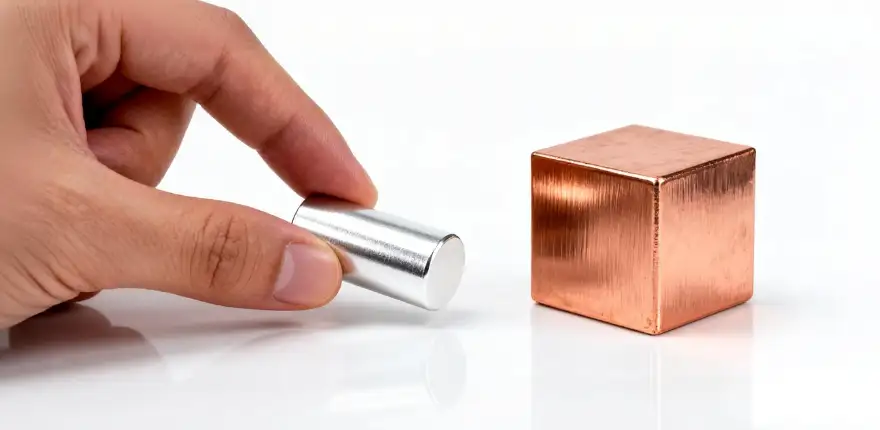
Copper is not magnetic. No matter how strong the neodymium magnet, copper will not be attracted to it. This leads many people to intuitively believe that copper is non-magnetic, a common understanding that is sufficient in most situations. However, stopping at simply non-magnetic is somewhat inaccurate. To be more accurate, copper is not completely non-magnetic, but rather a diamagnetic material.
When copper is near a magnet, the moving electrons within copper create their own tiny, opposing field to the external magnetic field. This causes a very weak push to the magnet. This can only be reliably measured using a high-precision magnetometer or special experimental equipment, and has been repeatedly verified by many authoritative institutions and laboratories.
Contents
Key Takeaways
- Magnetism is classified into diamagnetic, paramagnetic, and ferromagnetic materials. Copper belongs to the diamagnetic category.
- Magnetic properties are primarily determined by two modes of motion of electrons within the atoms.
- The magnetic susceptibility of copper, χ ≈ -9.63 × 10⁻⁶, indicates that copper is repelled by magnetic fields.
- The peculiar physical phenomenon of copper interacting with magnets originates from eddy current-driven interactions.
- The physical properties of copper are of significant importance for electrification, high-frequency communication, and scientific research equipment.
What is magnetism?
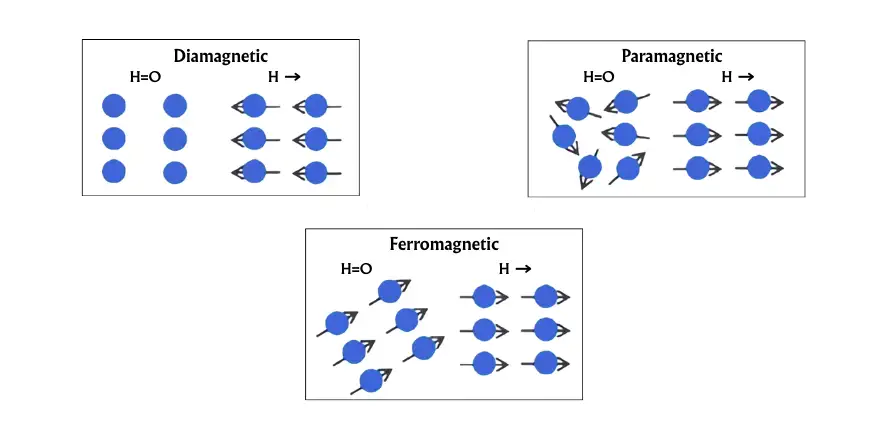
To understand why copper behaves as it does in a magnetic field, we need to examine it within the broader framework of how all materials are magnetically classified. All materials respond to magnetic fields, but their responses differ fundamentally. These differences stem from the arrangement of electrons within their atoms, leading to three primary categories: diamagnetic, paramagnetic, and ferromagnetic.
| Magnetic Type | Core Characteristics | Behavior After Removing Magnetic Field | Material Examples |
|---|---|---|---|
| Diamagnetism | Weak repulsion, magnetization disappears immediately | No residual magnetism whatsoever | Copper (Cu), Gold (Au), Silver (Ag), Bismuth (Bi) |
| Paramagnetism | Weak attraction | Magnetization disappears immediately, no residual magnetism | Aluminum (Al), Platinum (Pt), Oxygen (O₂), Magnesium (Mg) |
| Ferromagnetism | Strong attraction | Domains strongly align with the field, can retain most of the magnetization | Iron (Fe), Cobalt (Co), Nickel (Ni), Gadolinium (Gd) |
- Diamagnetic materials: All electrons in the atoms are paired. When an external magnetic field is applied, a weak induced magnetic field opposite to the external magnetic field is generated, causing the material to be slightly repelled, but usually very weakly.
- Paramagnetic materials: Atoms contain unpaired electrons. After an external magnetic field is applied, the spins of the unpaired electrons partially align with the direction of the magnetic field, generating a weak attractive force. This alignment disappears immediately after the magnetic field is removed.
- Ferromagnetic materials: Their atoms have many unpaired electrons. A powerful exchange interaction aligns the magnetic moments of adjacent atoms. After an external magnetic field is applied, entire regions called “magnetic domains” easily align with the field direction, generating a very strong attractive force. Some magnetization may remain after the magnetic field is removed.
The principle of magnetism
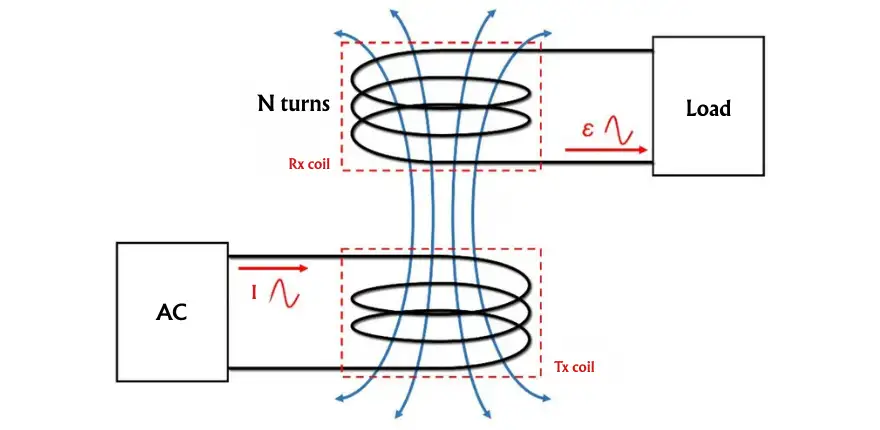
Magnetism actually originates from the movement of electric charges. In metallic materials, magnetism is primarily determined by two forms of motion of electrons within their atoms. We can use the Earth’s motion as an analogy to help understand this microscopic world: one is orbital motion, similar to revolution, and the other is spin motion, similar to rotation. According to classical electromagnetism, any closed path of current generates a magnetic field.
- Orbital magnetic moment: Electrons orbit the atomic nucleus like planets. The motion of negatively charged electrons in a closed path is equivalent to a tiny current loop, thus generating an orbital magnetic moment.
- Spin magnetic moment: Each electron possesses an inherent quantum property, namely spin. This is not classical mechanical rotation, but an intrinsic property in quantum mechanics, which also generates a magnetic moment called the spin magnetic moment.
Therefore, microscopically, each electron acts like a miniature bar magnet. This means that, theoretically, all materials containing electrons have the potential to respond to a magnet. So, why aren’t all materials obviously magnetic? The key lies in the pairing of electrons, which is strictly controlled by the Pauli exclusion principle: the same atomic orbital can hold a maximum of two electrons. All electrons are paired: Two electrons with opposite spins have their spin magnetic moments completely cancelling each other out, and the contribution of the magnetic moment from the filled electron shell orbitals is often net zero.
- All electrons are paired: Two electrons with opposite spins have their spin magnetic moments completely cancelling each other out, and the contribution of the magnetic moment from the filled electron shell orbitals is often net zero.
- When unpaired electrons are present: their individual magnetic moments do not cancel out, leaving the atom with a net magnetic moment. When an external magnetic field is applied, these atomic moments can align with it. The degree of alignment of the material is paramagnetic or ferromagnetic.
In other words, the strength and type of magnetism of a material ultimately depend on whether the electrons are paired and the net magnetic moment behaviour after pairing. Since we know that copper is considered a “non-magnetic” material in everyday life, it should belong to the type where all electrons are paired. We will now verify this inference by examining the electron configuration of copper.
Electron Configuration of Copper
The electronic configuration of a copper atom is [Ar] 3d¹⁰ 4s¹. At first glance, this seems contradictory: the 3d subshell has 10 fully filled electrons, but the outermost 4s orbital has only one unpaired electron. This isolated electron should carry a net spin magnetic moment, causing the isolated copper atom to exhibit paramagnetism. However, this is limited to the gaseous state and the copper atom state. Once solid copper is formed, the situation is completely different.
The outermost 4s valence electron is no longer confined to a single atom but is highly delocalized, detached from the atomic nucleus, and moves freely throughout the entire metal lattice, forming what is known as a “sea of conductive electrons.” The magnetic moments of these 4s electrons are randomly oriented and move rapidly within the material, with their net magnetic contribution approaching zero.
Tip: Solid copper is a diamagnetic metal.
Magnetic susceptibility of copper
Magnetic susceptibility (denoted by the Greek letter χ) is the most direct parameter for measuring the intensity of a material’s magnetic response. It is defined as the ratio of the magnetization M produced by the material to H under an external magnetic field: M = χH.
The value and even the sign (positive or negative) of χ directly tell us what kind of magnetism the material exhibits.
- χ > 0 (positive value): The material is attracted by the magnetic field.
- Small positive values (typically on the order of 10⁻⁵ ~ 10⁻³): Paramagnetic.
- Very large positive values (up to 10² ~ 10⁶ or higher): Ferromagnetic.
- χ < 0 (negative value): The material is repelled by the magnetic field.
High-purity solid copper has a volume magnetic susceptibility of about χ ≈ = -9.63 × 10⁻⁶ at room temperature. This value clearly indicates:
- Negative sign: Copper is indeed slightly repelled by the magnetic field, quantitatively confirming its weak diamagnetism, which is completely consistent with electronic structure theory.
- The magnitude is extremely small: -9.63 × 10⁻⁶. This value is very weak, much smaller than that of paramagnetic materials and far smaller than that of ferromagnetic materials. Under normal conditions, this repulsive force is almost masked by gravity, friction, etc., and is imperceptible. Only precision instruments can reliably measure it.
Therefore, copper’s what we call copper’s nonmagnetism is in fact a detectable and consistent form of weak diamagnetism. This faint repulsive force stems directly from its stable, fully paired electron structure. Copper neither becomes magnetised nor distorts an external magnetic field. It is this very trait that elevates copper to the ideal conductor for super-sensitive devices like advanced sensors, where magnetic interference must be minimized.
The Interaction Between Copper and Magnets
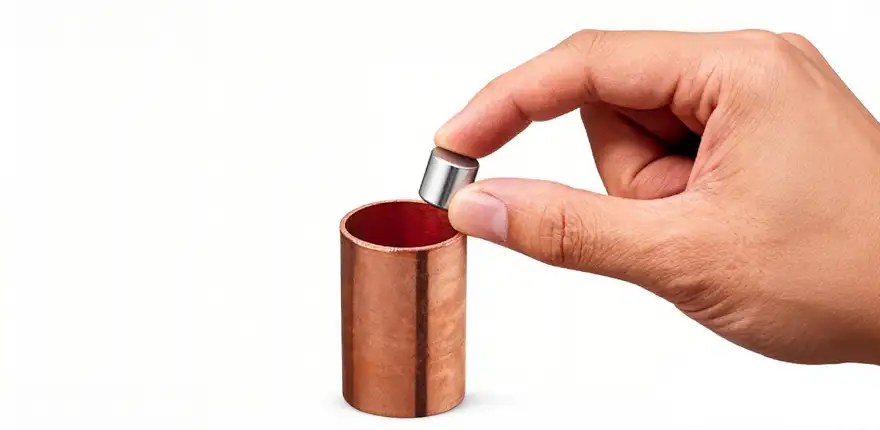
We have established that copper is weakly diamagnetic. In a stable magnetic field, it experiences an extremely weak repulsive force, so small that it is almost undetectable by sensitive instruments. However, there is a famous classic experiment: a strong neodymium magnet is rapidly inserted into a copper tube. You might expect it to fall freely. But in reality, its speed slows significantly as it enters the tube, almost as if it is gliding slowly. This seems to suggest that the copper is attracted by the magnet, which appears contradictory. What is the reason for this?
When the powerful magnet falls rapidly into the copper tube, its magnetic field relative to the tube wall is constantly changing. Here’s where Faraday’s law of electromagnetic induction comes in: a changing magnetic field induces a voltage within the conductor, which sets electrons in motion. These electrons don’t flow in straight lines, but form countless tiny closed loops, like countless microscopic vortex currents. These vortex currents are called eddy currents. These eddy currents are the real reason for the interaction between the copper tube and the magnet. They follow a fundamental physical principle called Lenz’s law.
Lenz’s law states that the magnetic field generated by an induced current (such as eddy currents) always opposes the change that produced it.
We can break down the process of a magnet passing through a copper tube from top to bottom using slow motion:
- Magnet moves downwards: The magnetic flux increases in the lower region of the copper tube.
- Eddy current generation: The change in magnetic flux causes eddy currents to be generated inside the copper tube.
- Resistance generation: According to Lenz’s law, these currents immediately generate their own magnetic fields to resist the change, creating a magnetic field opposite to the original one.
- Result: This temporary opposing magnetic field exerts an upward force on the magnet, counteracting gravity, causing the magnet to slow down significantly.
Copper only exhibits strong transient electromagnetic properties when the magnetic field changes. Once the magnetic field stops moving, the eddy currents disappear, and the copper returns to its non-magnetic state.
More Eddy Current Experiments
Besides the classic experiment of a powerful magnet slowly falling through a copper tube, there are many other simple, safe, and easy-to-do eddy current experiments at home or school. Most of these experiments only require a powerful magnet, conductive materials, and some everyday items to allow you to experience the electromagnetic braking effect of eddy currents firsthand. Below, I’ve listed several extended experiments particularly suitable for learning and hands-on experience, arranged from easiest to slightly more complex:
Safety Tip: Handle neodymium magnets with care during actual operation to avoid the risk of pinching injuries.
Experiment 1: Magnet Sliding Resistance Experiment
- Materials Required: A thick copper plate, a powerful neodymium magnet.
- Instructions: Place the magnet flat on the copper plate and gently slide it.
- You will see: The magnet slows down during the sliding process, like sliding in a viscous liquid.
Experiment 2: Simple Tube Sliding Experiment
- Materials Required: Kitchen aluminum foil, a small neodymium magnet, a regular paper tube.
- Instructions: Roll the kitchen aluminum foil into a thick tube, drop the magnet through the aluminum foil tube, and then drop it through the regular paper tube.
- You will see: A phenomenon similar to a magnet slowly falling through a copper tube.
Experiment 3: Damped Pendulum Experiment
- Materials needed: Copper sheet, thin string suspending a pendulum, and a strong magnet.
- Instructions: Roll kitchen aluminum foil into a thick tube. Drop the magnet through the aluminum foil tube, then drop it through the regular paper tube.
- You will see: A phenomenon similar to a magnet slowly falling through a copper tube.
By doing these experiments yourself, you’ll move beyond just knowing that copper or aluminum itself is not attracted by a magnet and does not possess ferromagnetism, they can induce strong eddy currents in a rapidly changing magnetic field, producing a magnetic force opposite to the direction of motion, thus allowing us to intuitively experience the electromagnetic damping effect. This is the most intuitive and impactful home demonstration of Lenz’s law.
Nonmagnetic Applications of Copper
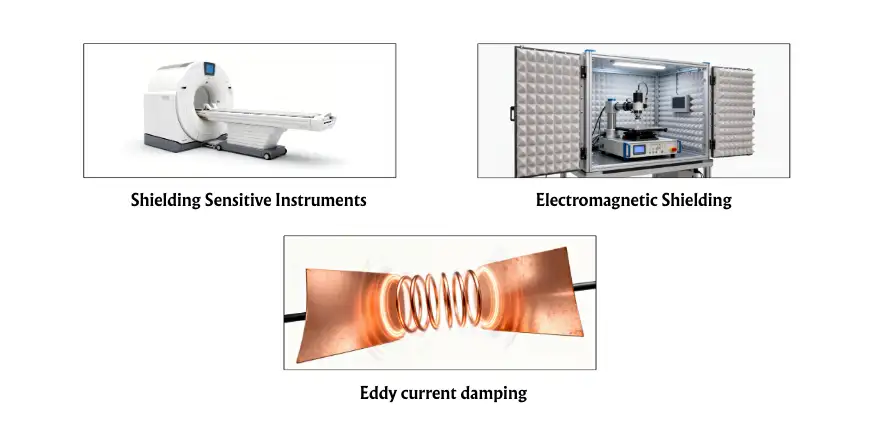
Despite its weak diamagnetism, copper’s unique combination of exceptional electrical conductivity, superb thermal conductivity, and natural non-magnetic properties makes it indispensable in modern precision engineering. We will now move from theory to practice, exploring how these properties can be cleverly applied in various industries.
Shielding Sensitive Instruments
Equipment such as NMR (Nuclear Magnetic Resonance) spectrometers, MRI scanners, and advanced spectrometers demand exceptionally pure and stable magnetic fields, typically with homogeneity at least in the ppm range. The presence of even trace ferromagnetic contaminants or magnetizable components can permanently distort this precise field environment, leading to serious consequences.
For example, in MRI, the main magnetic field strength is typically 1.5–7 T. If the support, radio frequency coil housing, or nearby structures contain ferromagnetic materials, they will be permanently magnetized, causing image artefacts, geometric distortion, or signal loss, directly affecting the diagnostic accuracy of tumor localization, brain functional imaging, and other procedures. In particle accelerators, SQUID superconducting quantum interference devices, or unmatched-field NMR spectrometers, additional magnetic field distortion can directly destroy expensive experimental data.
Copper’s perfect diamagnetism, combined with its high conductivity, makes it the preferred non-magnetic structural material for these applications. Common forms include:
- RF coil support frames and shielding covers made of high-purity oxygen-free copper.
- Copper shells and mounting brackets for gradient coils.
- Waveguides, resonant cavities, and connecting flanges.
- Conductive but non-magnetic rails or shielding layers inside instruments.
Electromagnetic Shielding
In our high-frequency modern world, electronic systems are bombarded with external electromagnetic interference (EMI). Unchecked, this EMI leakage can cause a surge in signal noise, distort measurements, and create safety risks. Precision instruments, MRI RF rooms, 5G base stations, EMC testing laboratories, and aerospace electronics bays all require highly efficient shielding.
Typical applications:
- 3oz or thicker copper foil, floors, and ceilings form complete RF shielded rooms.
- Copper shielding covers, chassis shells, and cable shielding braids.
- Copper-plated waveguides and filter cavities.
Eddy current damping
When a metal piece changes rapidly relative to a magnetic field, special loops of current are induced inside the conductor according to Faraday’s law of electromagnetic induction and Lenz’s law. These eddy currents interact with the original magnetic field, generating resistance that works against the motion. Copper is the preferred conductor material with its high electrical conductivity, antimagnetic properties, and high thermal conductivity. It is typically found in the form of thick copper plates, discs, tubes, or rings, placed near or in relative motion to permanent magnets. In essence, eddy current damping provides smooth, contactless braking by converting kinetic energy into heat via these induced currents.
- Passive Vibration Control: Precision equipment like optical tables, analytical balances, and laser interferometers must isolate themselves from ambient vibrations.
- High-speed transportation, elevator safety buffers, and industrial rotating machinery require reliable non-contact braking.
- Spacecraft attitude control and active suspension control in automobiles require maintenance-free, long-life damping.
How to Choose the Right Non-Magnetic Conductive Material?
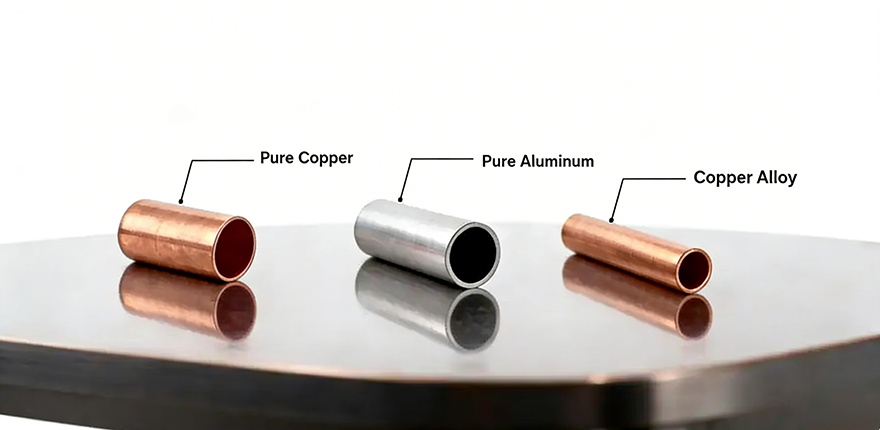
While copper’s anti-magnetic properties are impressive, it shouldn’t be your default pick for every project. The optimal choice hinges on a careful balance of performance, cost, weight, and environmental factors tailored to your needs. To navigate this decision systematically, consider the following key criteria:
What are the core performance requirements?
If you prioritize extremely high conductivity, no magnetic distortion, and are not cost-sensitive, copper is usually the first choice. It’s virtually irreplaceable in these scenarios because its conductivity is far higher than aluminum, providing complete antimagnetic shielding without leaving any residual magnetism.
Is cost the primary constraint?
When cost and weight are primary concerns, aluminum shines as the go-to choice. Aluminum has only about one-third the density of copper and about 61% of its conductivity, delivering excellent performance in eddy current applications. Its non-magnetic nature makes it a highly cost-effective solution where ultimate shielding performance is not critical. However, it’s important to note that aluminum is prone to oxidation, less durable in humid environments than copper, and has weaker shielding against low-frequency magnetic fields.
Do your application's mechanical demands go beyond what pure copper can offer?
For applications requiring greater hardness, wear resistance, or corrosion resistance than pure copper provides, copper alloys are the answer. These alloys, by adding elements such as zinc, tin, and nickel, greatly enhanced hardness, corrosion resistance, and mechanical strength, making them suitable for marine hardware, valves, bearings, springs, etc. However, a drawback is that their electrical conductivity is lower than that of pure copper and aluminum.
Below is a simplified side-by-side comparison to help you make a quick decision:
| Material Type | Main Advantages | Main Disadvantages | Applications |
|---|---|---|---|
| Pure Copper | Highest electrical & thermal conductivity, non-magnetic | Higher material cost | Eddy current damping plates, precision motor windings |
| Pure Aluminum | Excellent conductivity-to-weight ratio, low cost | Electrical conductivity ~61% of copper, prone to oxidation | Automotive radiators, electronic chassis/enclosures |
| Copper Alloys | Much better hardness, wear resistance & corrosion resistance | Significantly lower electrical & thermal conductivity | Piping components, corrosion-resistant structural parts |
Some FAQs
Does copper have magnetism?
Copper does not have magnetism. Ordinary magnets will not attract copper blocks at all, making them considered non-magnetic in everyday life and engineering. However, from a precise scientific perspective, copper is weakly diamagnetic.
Why does a strong magnet fall significantly slower when dropped from a copper tube?
During the fall, the magnet induces strong eddy currents in the copper tube wall. These eddy currents generate a reverse magnetic field, hindering the magnet’s movement.
Is there a difference in magnetism between aluminum and copper?
Both are considered non-magnetic in engineering. Copper is typically diamagnetic, while aluminum is weakly paramagnetic.
Do copper alloys still exhibit diamagnetism?
Pure copper alloys retain a weak diamagnetism similar to pure copper. Unless ferromagnetic impurities are accidentally introduced into the alloy, it remains non-magnetic overall.
Is copper's diamagnetism useful in everyday life?
Copper is commonly used in precision instruments, such as MRI equipment.
Does copper's diamagnetism change with temperature?
Copper’s diamagnetism is not sensitive to temperature; the change in magnetic susceptibility is negligible.
For more insights, check these related blogs:
Top 5 Permanent Magnet Manufacturers in China 2026
What’s the Difference Between Neo, NdFeB, and Neodymium Magnets?
Surface-Mounted vs. Interior Permanent Magnet Motors
The Comprehensive Guide to Rare Earth Magnets in 2026
Permanent Magnet History & Procurement Guide (2026)
Ready to upgrade your project? Browse our full product line at TOPMAG!🧲

I'm dedicated to popular science writing about magnets. My articles mainly focus on their principles, applications, and industry anecdotes. Our goal is to provide readers with valuable information, helping everyone better understand the charm and significance of magnets. At the same time, we're eager to hear your opinions on magnet-related needs. Feel free to follow and engage with us as we explore the endless possibilities of magnets together!