 Among the many wonderful phenomena that make up nature, probably one of the most interesting is magnetism. The ancients first found it in the form of natural lodestones. The most familiar magnets in our lives today are the concrete representations of this phenomenon. From the persistence of magnetism, there are three kinds of magnets: temporary magnets, electromagnets, and permanent magnets. In this regard, permanent magnets are the most common in everyday life, while their magnetic force is constant and unchangeable.
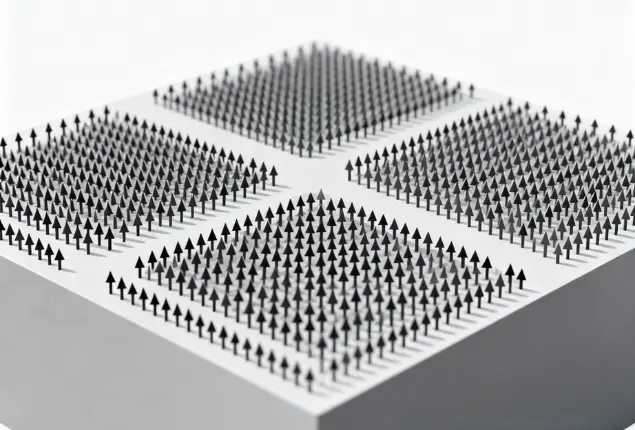
According to modern physics, magnetism is a phenomenon originating from the motion of electric charges in materials. When magnetic moments are aligned in an orderly fashion in a material, that material produces a magnetic field, exhibiting familiar attractive or repulsive mechanical characteristics.
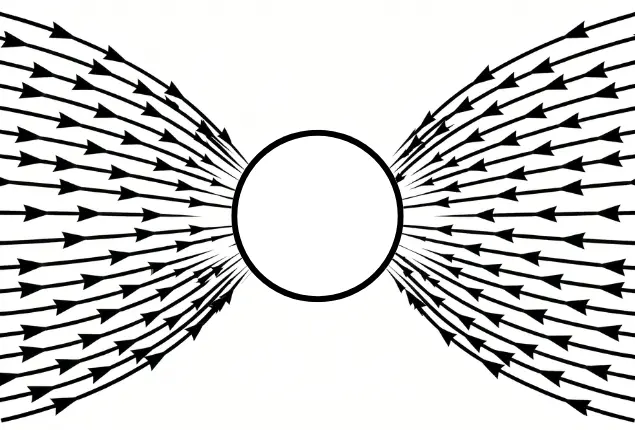
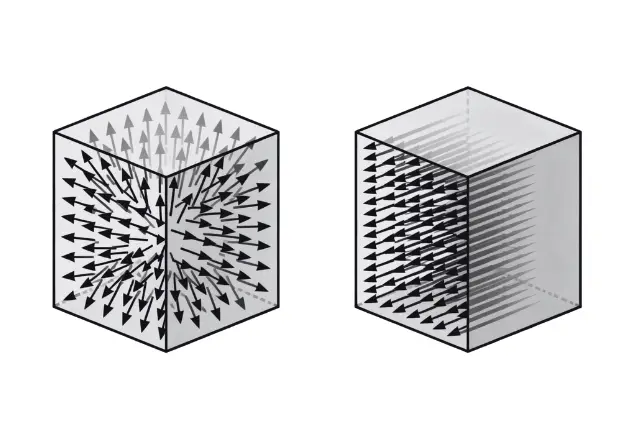
 William Gilbert, an Englishman, was the first to distinguish magnetism from electricity through various experiments. He published De Magnete, in which he said that the Earth itself is a huge magnet and put forward some laws of magnetic poles. His claim earned him the name “father of magnetism.” From here, the history of magnetism entered science in a more systematic manner.
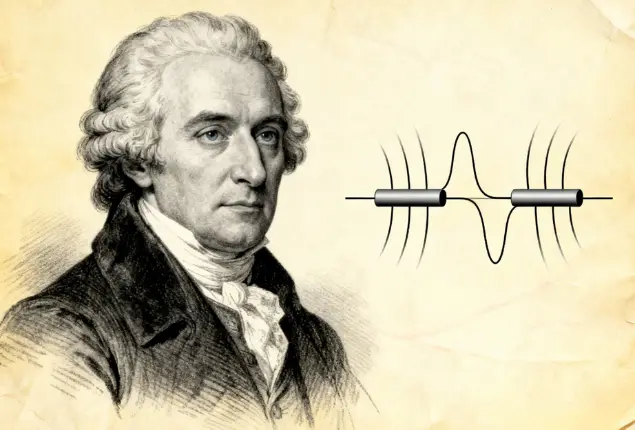 André-Marie Ampère sets up the theory of magnetic effects of currents. The French physicist André-Marie Ampère quickly followed through proposing Ampère’s law and the current element hypothesis. He quantitatively explained the magnetic interactions of the currents between each other, elaborating on the foundations of classical electrodynamics.
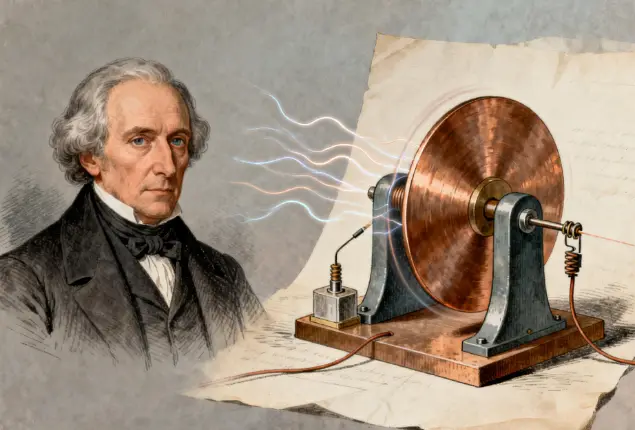 Michael Faraday discovers electromagnetic induction. The British scientist Michael Faraday discovered the fact that a magnetic field that varies with time induces current in a closed loop. this culminated in the law of electromagnetic induction. He introduced “lines of force” and built the first prototype of an electric generator, giving birth to an entirely new era in human history, the electrical age.
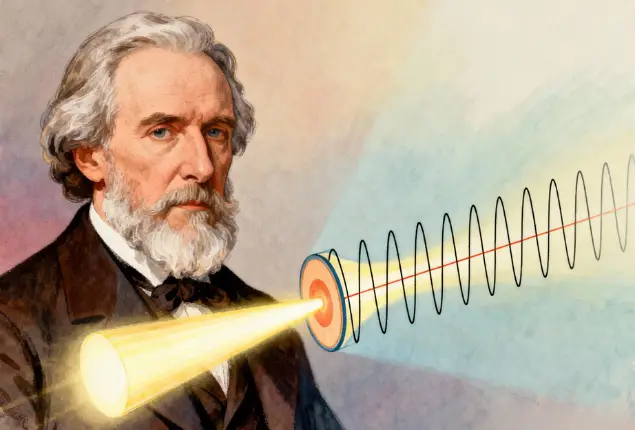 James Clerk Maxwell unifies electromagnetic theory. The Scottish physicist Sir James Clerk Maxwell proposed what is now called the Maxwell equations: a total unification of electricity, magnetism, and optics. He predicted that electromagnetic waves would travel with the speed of light and demonstrated that light itself was an electromagnetic wave. That was the crowning achievement of classical electromagnetism, an arc of tremendous implications for modern physics.
 Louis Néel elucidates complex magnetic structures. The French physicist Louis Néel enunciated the theories of ferrimagnetism and antiferromagnetism, describing cases of well-developed magnetic moments that oscillate in an antiparallel fashion but nevertheless yield a net magnetic moment. This was the theoretical basis of modern magnetic materials such as ferrites.
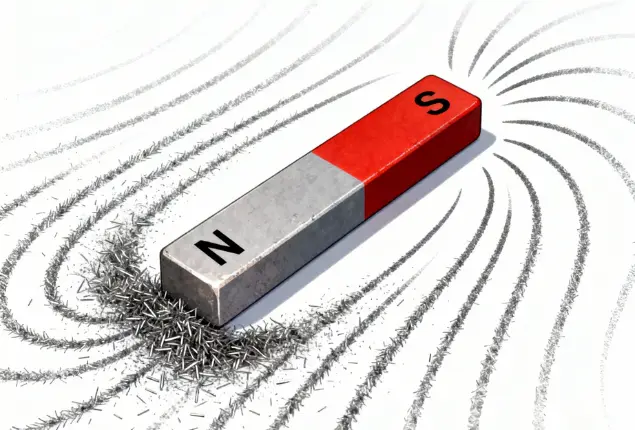
 Magnetic field lines are not things you can actually see—they’re abstract mathematical constructs. Generally, auxiliary methods are employed to visualize their shape. one may sprinkle fine iron filings around a magnet. When in the magnetic field, the iron filings become magnetized and thus align along the field lines, making remarkable chain-like patterns.
The pattern relative to a bar magnet reveals curved lines, emanating from the N pole yet thickly clustered. They are very close together near the poles but sparse in the middle and curve to meet at the South Pole. This quite logically illustrates the shape of the magnetic field and dipolar nature.
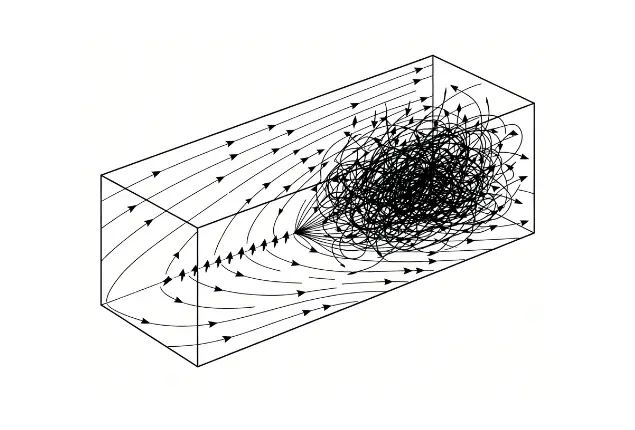
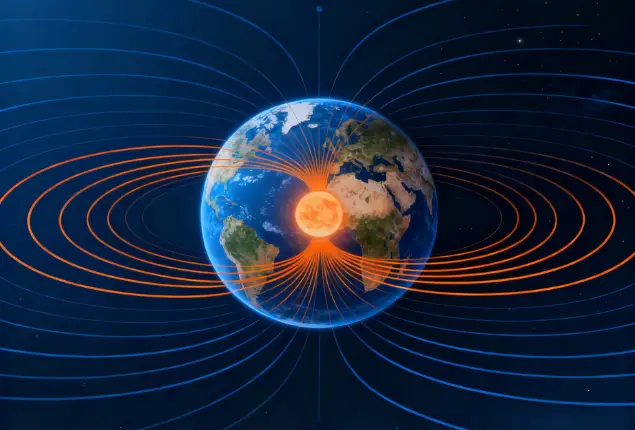 Earth could be considered a huge spherical magnet, with its magnetic field resembling a tilted dipole, projecting outwards in a dynamic magnetosphere. The most immediate benefits presented by the magnetosphere involve defense: a “force field shield” repels most of the solar wind and high-energy cosmic rays, which would otherwise strip the atmosphere and leave an environment hostile for life, thus allowing it to continue and reduce radiation damage to biological DNA. Nevertheless, some consequences arise: geomagnetic storms disrupt satellite communications and power systems, while plasma instabilities within the magnetotail occasionally cause satellite malfunctions or navigation errors.




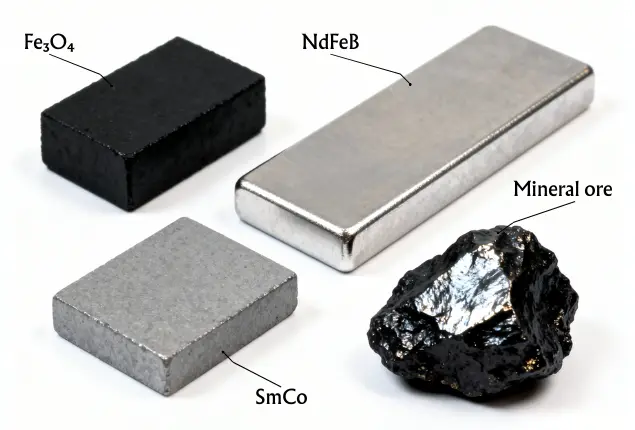 Strong magnetism mainly refers to ferromagnetic and ferrimagnetic metals and alloys.
Ferromagnetic metals: Iron (Fe), Nickel (Ni), Cobalt (Co).
Rare-earth magnetic metals: Gadolinium (Gd), Dysprosium (Dy) exhibit ferromagnetism at low temperatures.
Certain alloys and compounds: Such as NdFeB (Nd₂Fe₁₄B), SmCo (SmCo), magnetite (Fe₃O₄).
Chromium (Cr) and Manganese (Mn), under special conditions, can exhibit magnetism in specific conditions or alloys.
 The vast majority of metals exhibit paramagnetism or diamagnetism, showing no strong magnetism macroscopically:
Common non-magnetic metals: Copper (Cu), Aluminum (Al), Gold (Au), Silver (Ag), Zinc (Zn), Lead (Pb), Tin (Sn), Titanium (Ti), Mercury (Hg).
Stainless steel: Austenitic stainless steel is generally non-magnetic.
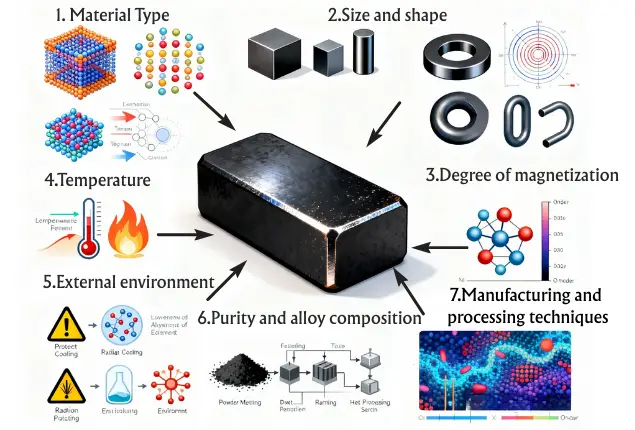 Material type: The microscopic structure of different materials determines their intrinsic magnetic properties. Intrinsic attributes like Curie temperature and crystal anisotropy directly affect the order and stability of magnetic moments. This is the “innate foundation” of magnet strength, other factors optimise upon it.
Size and shape: Magnets are not isolated. they produce a demagnetising field attempting to weaken internal magnetisation.
Degree of magnetization: Magnets need full magnetization in a strong external field to reach potential. If not saturated, magnetic domains are not fully aligned, resulting in weak macroscopic magnetism. In practice, pulse magnetizers ensure saturation. In the hysteresis loop, remanence Br reflects residual strength after saturation.
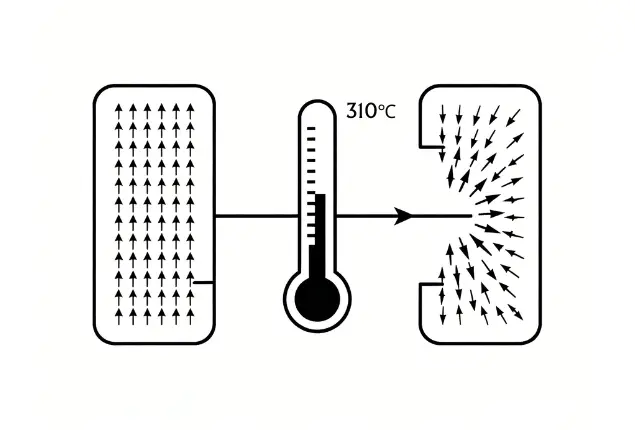
Temperature: Rising temperature intensifies atomic thermal vibrations, disrupting magnetic domain order, leading to decreased magnetism. Many permanent magnets have reversible and irreversible losses: magnetism enhances at low temperatures, but exceeds a threshold at high temperatures, causing permanent demagnetization. Selecting high Curie temperature materials improves temperature resistance.
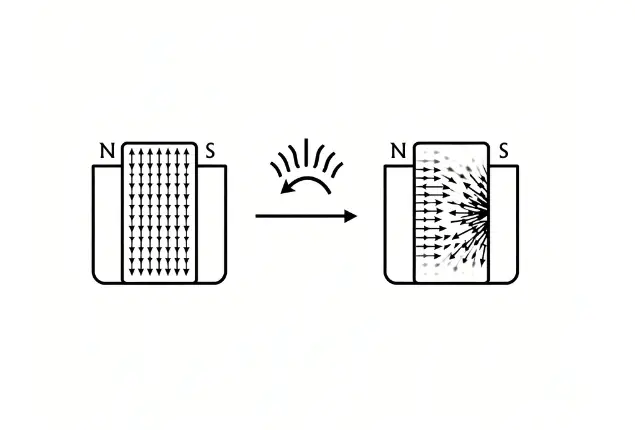
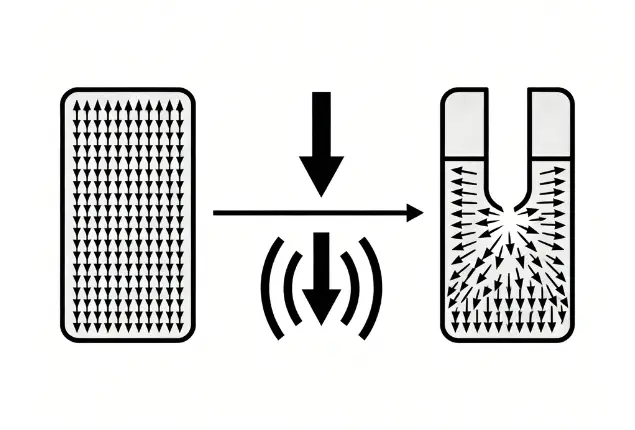
External environment: Strong reverse magnetic fields can flip domains, causing demagnetization. High-energy radiation damages lattices, corrosion erodes surfaces, reducing effective volume. Typically protected by coatings.
Purity and alloy composition: Alloying is key to enhancing magnetism. adding dysprosium to NdFeB increases coercivity, resisting high-temperature demagnetization. High purity reduces defects, improving domain consistency.
Manufacturing and processing techniques: Modern permanent magnets often use powder metallurgy, pulverising alloy powder, orienting and pressing in a magnetic field, sintering for densification, and tempering for optimisation. Orientation makes easy magnetization axes parallel in grains, enhancing anisotropy. heat treatment refines domain walls, increasing coercivity.