
 Magnetic field strength is a physical vector describing a magnetic field. It primarily reflects the magnitude and direction of the magnetic effect produced by a magnetic source in space, and is unaffected by the magnetic permeability of the surrounding medium.It differs from magnetic flux density (B):
- Magnetic flux density (B): Considers the influence of the medium and represents the actual force exerted by the magnetic field on charged particles.
- Magnetic field strength (H): Focuses more on the characteristics of the magnetic field and is often used in magnetic circuit calculations.
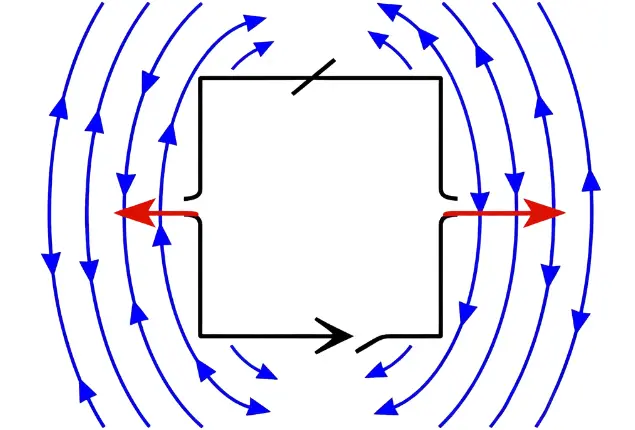 Based on Faraday’s law of electromagnetic induction, this method uses the motion of a coil in a magnetic field to generate an induced electromotive force for measuring B.
Instantaneous Measurement Method: Moving the detection coil within the target magnetic field induces a rapid change in magnetic flux, ΔΦ. This generates an induced electromotive force pulse. By integrating this voltage pulse, the change in magnetic flux ΔΦ = N · A · B (N: number of coil turns, A: effective area) can be calculated, thereby yielding the average value of B.
Continuous Measurement Method: The coil is continuously rotated in the magnetic field at a certain frequency, producing an alternating sinusoidal voltage with a peak value of U_m ∝ B · ω · N · A (where ω is the angular velocity). As long as the amplitude of the voltage is measured, B can be immediately determined.
✅ Advantages: Simple structure, no power supply required, low cost, suitable for strong magnetic fields.
❌ Limitations: Only suitable for measuring changing magnetic fields, cannot measure static magnetic fields.
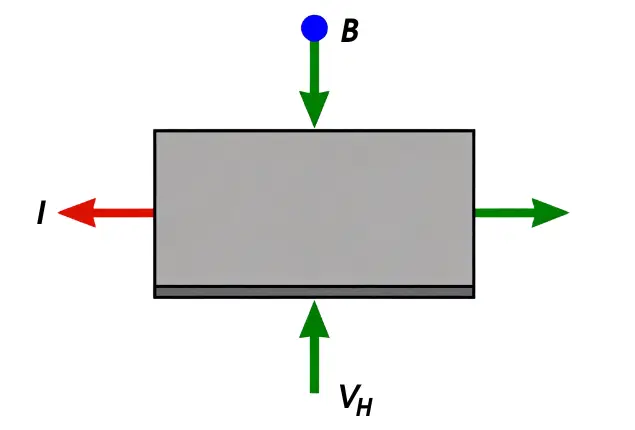 When a current I flows through a semiconductor material perpendicular to a magnetic field B, a voltage VH is generated between the upper and lower surfaces of the semiconductor. The magnitude of VH is VH = (I · B) / (n · e · t).
✅ Advantages: Suitable for both DC and AC magnetic fields, compact size, and the probe can be miniaturized.
❌ Disadvantages: High temperature sensitivity, requiring temperature compensation.
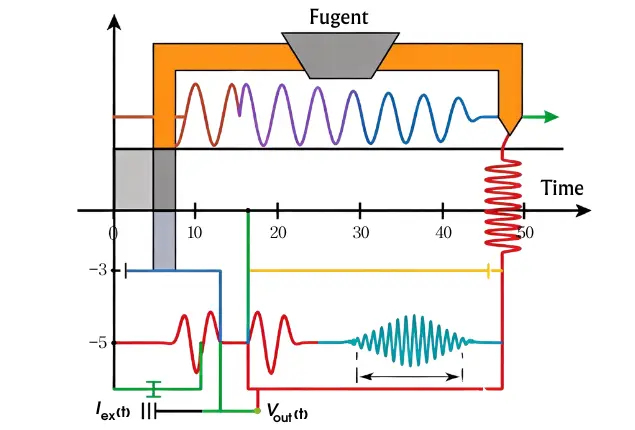 Applying a high-frequency alternating saturation current to the drive coil will periodically drive the magnetic core into a magnetic saturation state. When an external magnetic field is introduced along the axis, asymmetric saturation will occur, generating even-order harmonics. The strength and direction of the magnetic field can be accurately inferred from the amplitude and phase of these harmonics.
✅ Advantages: High sensitivity, low noise, strong vector measurement capability.
❌ Limitations: Complex structure, high cost.
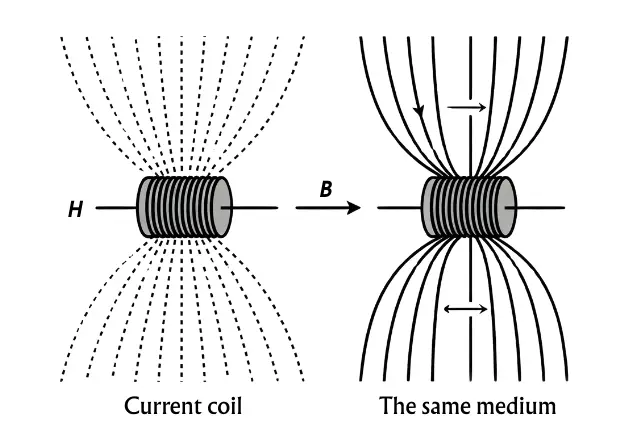 In electromagnetism, magnetic field strength and magnetic flux density are two closely related but distinct concepts: H is primarily determined by free current, while B includes the magnetization contribution of the material. The formula for calculating magnetic field strength is: H = B / μ (H: magnetic field strength, B: magnetic flux density, μ: permeability).
This formula originates from Maxwell’s equations and reflects the propagation characteristics of magnetic fields in different media. Physically, H represents the strength of the “magnetic field source,” unaffected by the material. B, on the other hand, describes the actual magnetic effect, influenced by the material’s permeability.
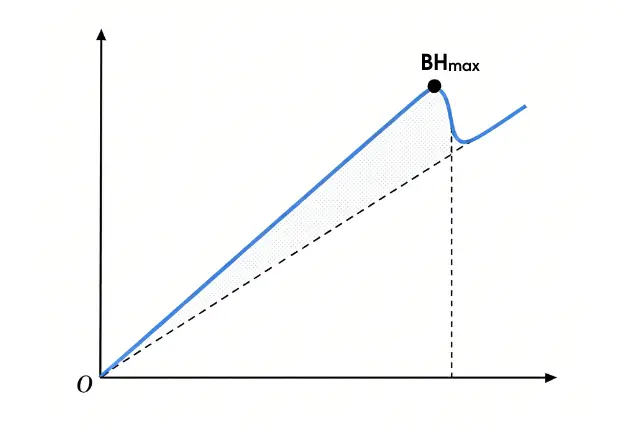 The “maximum energy product” (BHmax) of a material is a key indicator of the performance of permanent magnets. It represents the maximum magnetic energy stored per unit volume of the material.
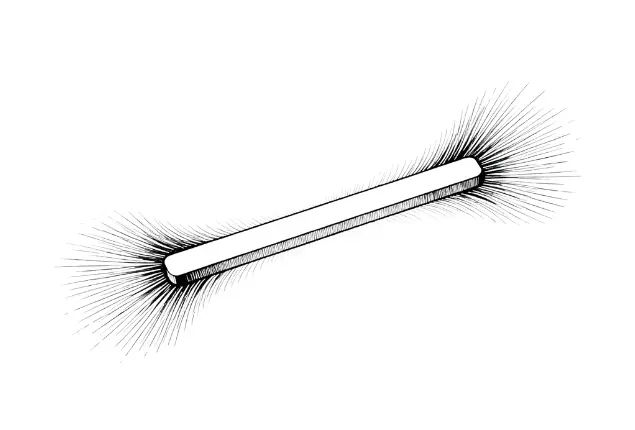 This phenomenon is technically termed the “Demagnetizing Field.” A long, thin bar magnet has its strongest field near its ends but is weak at its sides, whereas a short, thick magnet struggles to maintain high intensity along its magnetized axis due to its own strong demagnetizing field.
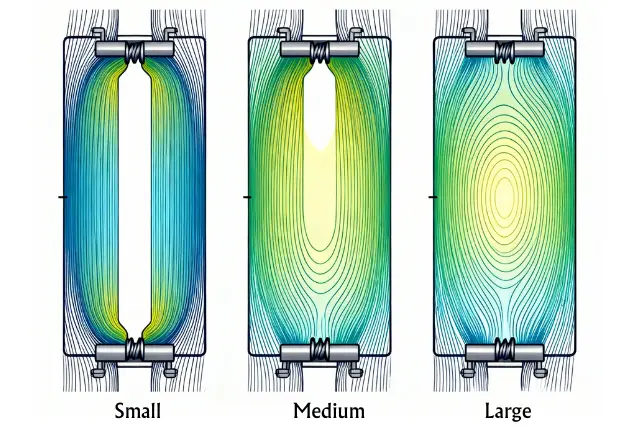 A well-designed magnetic circuit provides a low-impedance path for magnetic flux, The air gap in the magnetic circuit is a crucial factor, an excessively large air gap reduces the magnetic field strength.
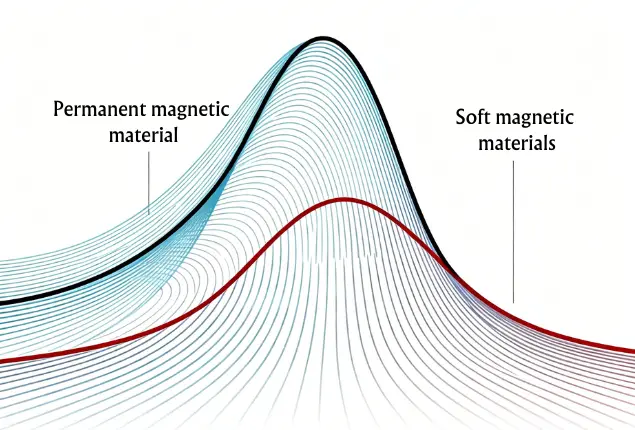 For most permanent magnet materials, increasing temperature directly causes a reduction in magnetic field strength, with a critical temperature point for irreversible loss. For some soft magnetic materials, initial permeability may first increase and then decrease with temperature.
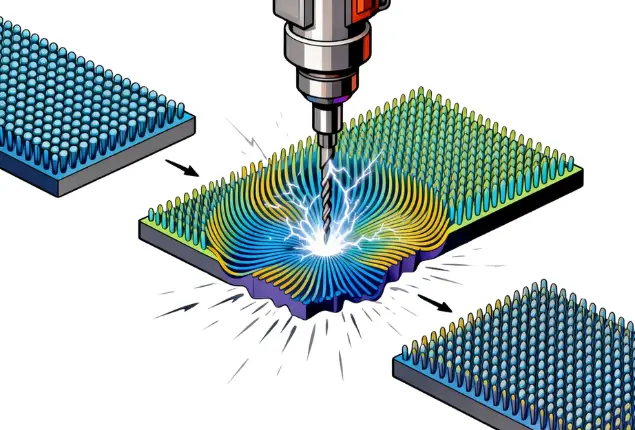 Applying pressure or strong mechanical shock to a magnetic material can alter its internal domain structure, leading to changes in remanence and magnetic field strength.
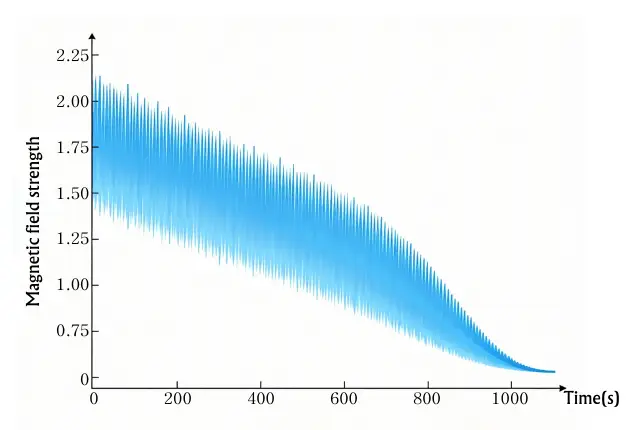 For rare earth magnets, even without external disturbances, their magnetic field strength undergoes extremely slow decay over time, known as the “aging effect.”
