
N52: The Strongest Neodymium Magnets
- Ethan
- Knowledge base
N52 neodymium magnet is one of the most mature and stable top-performance grades of commercially available sintered NdFeB permanent magnet materials. Although grades labeled N54, N55, and even higher have appeared on the market, these higher-grade magnets are mostly still in small batch pilot production.
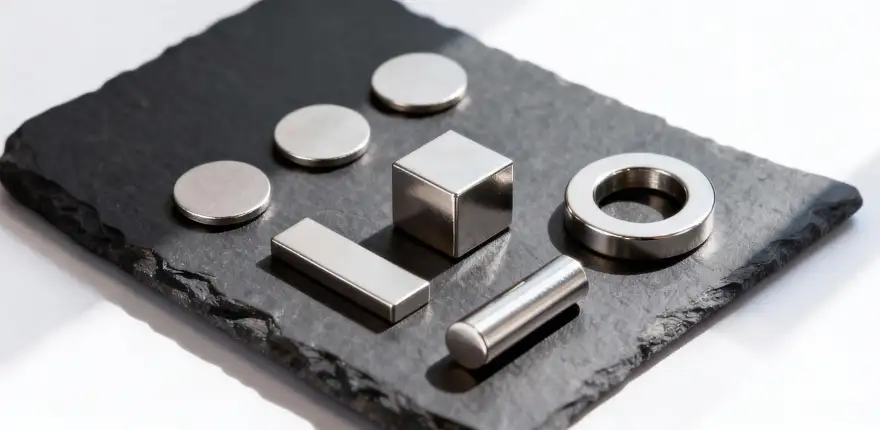
In the pricing systems of most suppliers, N52 is still widely recognized as representing the highest performance grade. If you are planning to purchase NdFeB magnets, the following key factors can help you systematically evaluate and make an accurate decision:
- Ultimate Performance: Influenced by dimensions, shape, magnetization direction, etc.
- Application: Drive motors, EPS steering systems, brake systems, wind turbine rotors, etc.
- Surface Treatment: Nickel plating, copper plating, zinc plating, etc.
- Price: Affected by rare-earth raw material costs, plating, production process, purchase volume, etc.
- Supplier Qualifications: ISO 9001, IATF 16949, RoHS, REACH, etc.
If you have specific usage requirements for the magnets, please provide detailed parameter drawings. That way, we will be able to carry out an exhaustive feasibility study on the project and guarantee that the final product will meet your performance specifications 100%.
Contents
Key Takeaways
- In 2026, N52 neodymium magnets will remain the most practical and cost-effective high performance magnets.
- The primary advantage of N52 magnets lies in their compact size coupled with exceptional magnetic strength.
- The manufacturing process for N52 magnets is highly mature, with a stable supply chain.
- When selecting suppliers, prioritize those with a solid reputation and certifications such as ISO 9001, IATF 16949, and RoHS compliance.
- Choose magnets based on actual performance requirements rather than solely pursuing the strongest magnet available.
N52 Magnet Performance
From N35 to N52: How are neodymium magnets graded?
Neodymium magnets possess numerous performance parameters, including remanence (Br), coercivity (Hcb), intrinsic coercivity (Hcj), and maximum energy product ((BH)max). To facilitate buyers’ quick differentiation of different performance grades, the rare earth industry has developed a standardized magnetic performance grading system. This grading standard originates from the International Electrotechnical Commission (IEC) classification specification for permanent magnet materials, and in China, it corresponds to standard GB/T 13560. These standards provide suppliers with a unified global reference benchmark.
| Grade | (BH)max (MGOe) | Br (kGs) | Hcj (kOe) |
|---|---|---|---|
| N35 | 33–36 | 11.7–12.2 | ≥12 |
| N38 | 36–39 | 12.2–12.5 | ≥12 |
| N40 | 38–41 | 12.5–12.8 | ≥12 |
| N42 | 40–43 | 12.8–13.2 | ≥12 |
| N45 | 43–46 | 13.2–13.7 | ≥12–13 |
| N48 | 46–49 | 13.7–14.2 | ≥12–14 |
| N50 | 48–51 | 14.0–14.5 | ≥12–15 |
| N52 | 49–53 | 14.2–14.8 | ≥11–18 |
NdFeB magnet grades consist of letters and numbers. The letters indicate the maximum continuous operating temperature, i.e., the highest temperature at which the magnet can operate stably for an extended period. The numbers represent the maximum energy product, which is the most important indicator for measuring the overall magnetic performance of the magnet.
Why is N52 considered the strongest magnet?
Since their development in the 1980s, neodymium magnets have gradually replaced samarium cobalt magnets, becoming the mainstream in the market due to their better suitability for mass production, more stable supply chains, and higher cost-effectiveness. Currently, most mainstream suppliers and online stores stock large quantities of N52 grade NdFeB magnets.
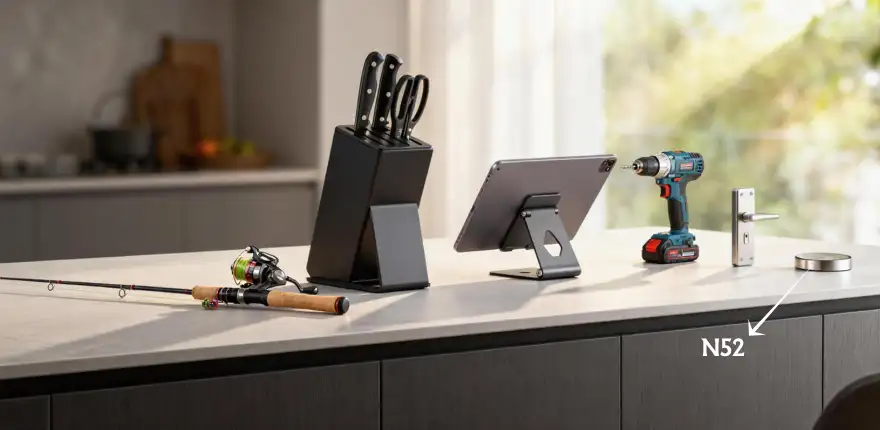
Although higher grades such as N55 have achieved commercial production and are available for purchase, they have not yet replaced N52 in most applications due to significantly higher costs, poorer temperature stability, greater mechanical brittleness, and overall cost-effectiveness still inferior to N52. It is projected that by 2026, N52 will remain the most mainstream and cost-effective commercially available high-end grade of sintered NdFeB magnets. Common applications of N52 magnets include:
- Magnetic Fishing Gear: Strongly attracts underwater metal treasures.
- Magnetic Knife Holder: Mounts knives, screwdrivers, scissors, etc.
- Tablet Stand: Magnetic car, desktop stand.
- Power Tools: High torque delivered internally by a compact motor.
- Magnetic Door Snapper: Concealed, powerful closure.
Tip: For 99% of ordinary consumers and DIY enthusiasts, the magnetic force of the N52 far exceeds what is needed to meet standard suction requirements.
How many pounds can an N52 magnet lift?
The adsorption capacity of N52 neodymium magnets is not a fixed value, but is affected by a combination of factors such as size, shape, and contact method. The following are actual weight test data conducted under laboratory conditions using a disc as a reference, and are for reference only.

| Common Size | Typical Holding Force (kg) | Example Object |
|---|---|---|
| Ø10 × 2 mm | 2 kg | Small screwdriver |
| Ø20 × 5 mm | 15 kg | 10 kg iron block |
| Ø30 × 10 mm | 35 kg | 25 kg adult dumbbell |
| Ø40 × 30 mm | 150 kg | 100 kg iron piece |
| Ø60 × 100 mm | 400 kg | Large industrial heavy object |
Note: N52 magnets have an extremely strong adsorption force, so be sure to take protective measures when using them.
The True Limits of N52 Magnets: Detailed Explanation of Temperature Curves
For applications where performance is critical, precise and dependable performance parameters of the N52 NdFeB magnet are core references for new project development. They inure core references for magnetic circuit design, reliability verification, and even batch consistency checking.
| Parameter | Values |
|---|---|
| Grade | N52 |
| Size | D20 × 10 mm |
| Max Operating Temperature | 80°C |
| Br (Residual Induction) | 1.42–1.48 T (14.2–14.8 kGs) |
| Hcb (Coercivity) | 828–907 kA/m (10.4–11.4 kOe) |
| Hcj (Intrinsic Coercivity) | ≥876 kA/m (≥11 kOe) |
| (BH)max (Maximum Energy Product) | 49.5–52 MGOe (390–415 kJ/m³) |
| Density | ≈7.5 g/cm³ |
| Hardness / Mechanical Property | Very brittle, poor impact resistance |
Generally, these factors bear testing using a B-H hysteresis loop analyzer. The temperature demagnetization curve for the N52 magnet, as illustrated below, indicates the variation in magnetic flux density B with an applied demagnetizing field H at various temperatures.With these temperature demagnetization curves, engineers can:
- Intuitively compare the actual magnetic properties of multiple batches of magnets.
- Accurately assess the real-world performance of magnets under high-temperature conditions.
- Identify and mitigate potential performance drift or irreversible high-temperature demagnetization risks during the design phase.
- Ensure the long-term stability and reliability of new projects throughout the entire process, from design verification to mass production.
Will N55, N60, or even more powerful magnets emerge in the future?
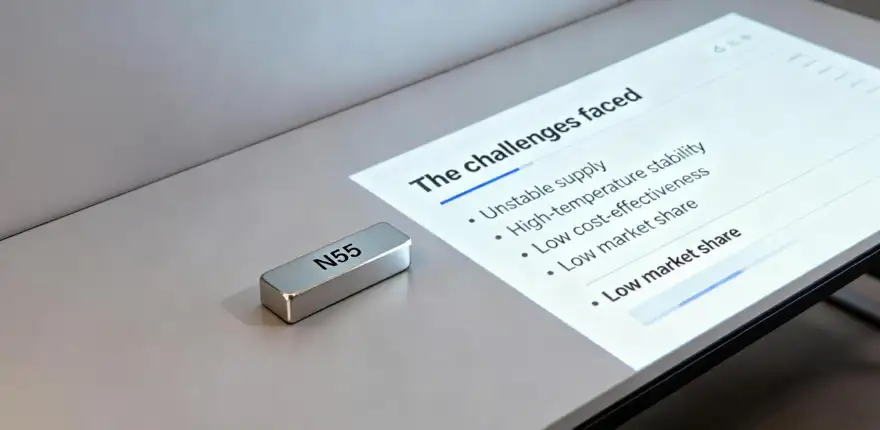
I believe so. Currently, N55 magnets have been partially commercialized and are being applied in high-end professional fields. However, N60 and the theoretically proposed N64 remain primarily theoretical concepts and are unlikely to replace N52 as the mainstream magnet within the next few years. The challenges currently facing N55 magnets include:
- Unstable supply: Large batch quality fluctuations.
- High-temperature stability: Poor coercivity (Hcj).
- Low cost-effectiveness: Cost increases by 100%, but performance improvement is minimal.
- Low market share: N52 still dominates.
Tip: Due to its small additional gain, high cost, and poor stability, it is far less practical than optimizing existing N52 magnets.
2026 N52 Neodymium Magnet Selection Guide
Is the N52 magnet worth buying?
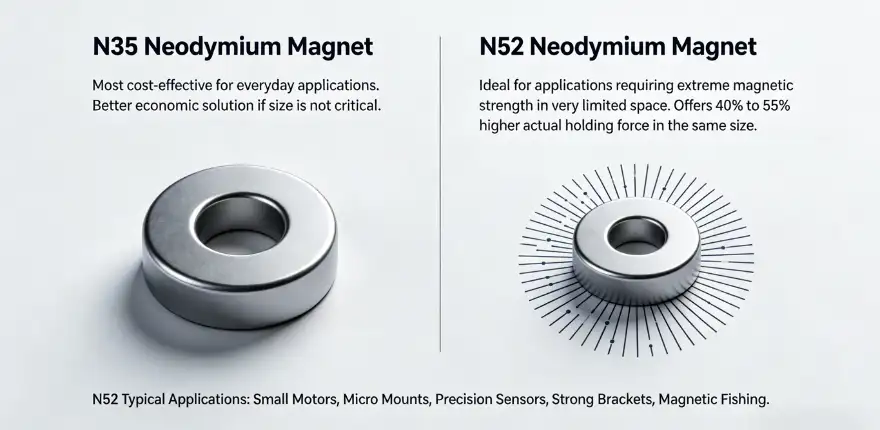
For everyday applications, N35 neodymium magnets most typically represent the most cost-effective option relative to application needs. If your application demands high magnetic strength with extremely limited space, N52 magnets are well worth considering. At equivalent sizes, N52 magnets deliver 40–55% greater actual holding force. Before purchasing neodymium magnets, you should establish your needs: The true value of N52 lies in space-constrained applications. If size is not a critical factor, N35 would be the far more cost-efficient solution. Typical application areas that use N52 magnets include:
- Small motor
- Miniature mount
- Precision sensor
- Strong bracket
- Magnetic fishing
Note: A higher magnet grade is not always better, prioritize cost-effectiveness.
Why is there such a big price difference for the same size N52?
For N52 neodymium iron boron magnets of the same size, prices from different suppliers can vary by 2-3 times or even more, which is very common among most mainstream suppliers and e-commerce platforms. The core reason is usually a combination of the following factors:
- Vast fluctuations in rare earth raw material prices
- Inaccurate labeling of magnet grades
- Price differences between factories and traders
- Larger purchase volumes can secure more favorable prices
- Tolerance requirements can widen price gaps
- Policy tightening significantly impacts magnet prices
If you receive quotes from multiple magnet suppliers with large price differences, consider whether these factors are at play.
Tip: Don't just focus on the lowest price, quality is also paramount.
N52 Magnet Safety Usage Guide
Is using N52 magnets for magnetic therapy reliable?
Based on current mainstream scientific evidence and literature reports, static magnetic fields cannot be used as a reliable means to treat pain, arthritis, or cervical spondylosis. Any actual or perceived improvement is a placebo effect, not a biological effect produced by the magnetic field itself.
- Placebo effect: Subjective pain reduction may occur after wearing magnetic therapy products, but the sham magnet group showed similar effects in double-blind trials.
- Short-term subjective improvement: This may be due to local massage, heat application, or natural recovery, rather than the magnetic field.
- Commercial promotion: Many sellers claim to improve microcirculation and activate cells, but there is a lack of independent verification mechanisms.
Note: The use of N52 magnets for magnetic therapy lacks scientific evidence and is more of a marketing gimmick.
How dangerous are N52 magnets?
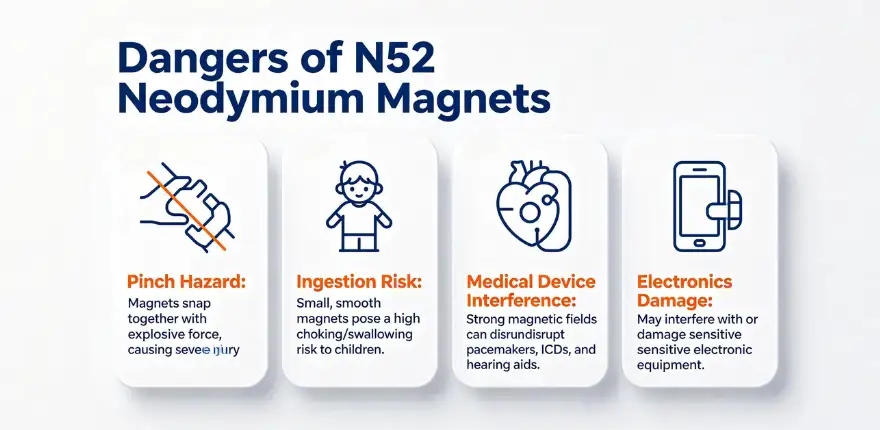
N52 neodymium magnets have an incredibly strong attraction. Even small magnets can easily attract weights exceeding 10 kg, making them extremely dangerous to use. Improper handling can lead to serious injury. The following are the most common risks associated with N52 magnets:
- Pinching Injuries: When two N52 magnets come into proximity, they snap together with explosive force at an extremely rapid speed, exerting a force far exceeding what the human body can withstand.
- Ingestion Risk: Small N52 magnets appear smooth and resemble candy/toys, posing a high risk of accidental swallowing by young children.
- Medical Device Interference: The intense surface magnetic field of N52 magnets can disrupt pacemakers, implantable cardioverter-defibrillators (ICDs), insulin pumps, cochlear implants, and similar devices.
- Other Potential Hazards: Damage to electronic equipment.
Tip: Keep N52 magnets away from children and pets, storing them in secure areas. When handling these magnets, take precautions to avoid injury from mishandling.
Some FAQs
Is N52 currently the strongest neodymium magnet?
As of 2026, N52 remains the most commercially mature and cost-effective mainstream top-tier grade.
How much weight can an N52 magnet lift?
Lifting capacity is not a fixed value; it depends on size, shape, contact surface, etc.
Which is a better buy, N52 or N35?
N35 offers better value when space isn’t a concern and cost-effectiveness is prioritized.
Why do N52 magnets of the same size vary in price by 2–3 times?
Primary factors include: rare earth material price fluctuations, supplier type, tolerance requirements, purchase volume, and supplier qualifications. We recommend comprehensive evaluation rather than focusing solely on the lowest price.
Can N52 magnets be used for magnetic therapy?
Unreliable. Magnetic therapy products are often primarily marketing gimmicks.
What is the maximum temperature tolerance for N52 magnets?
Standard N52 magnets can withstand continuous operation up to approximately 80°C.
Will N55 or stronger magnets replace N52 in the future?
Unlikely within the next 3–5 years. N52’s combined advantages in cost, stability, and supply are expected to maintain its market dominance.
What are the primary hazards associated with using N52 magnets?
Severe finger pinching injuries, accidental ingestion by children, and damage to electronic devices.
For more insights, check these related blogs:
How to Get the Best Wholesale Price for Neodymium Magnets in 2026
Top 5 Permanent Magnet Manufacturers in India 2026
Neodymium loudspeakers will not replace ferrite loudspeakers in 2026
N55 Neodymium Magnet Where Can You Buy
Ready to upgrade your project? Browse our full product line at TOPMAG!🧲

I'm dedicated to popular science writing about magnets. My articles mainly focus on their principles, applications, and industry anecdotes. Our goal is to provide readers with valuable information, helping everyone better understand the charm and significance of magnets. At the same time, we're eager to hear your opinions on magnet-related needs. Feel free to follow and engage with us as we explore the endless possibilities of magnets together!