
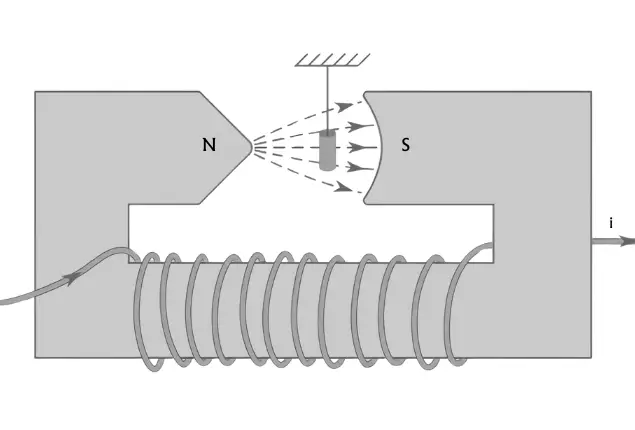
 Magnetization essentially refers to the process of imparting magnetism to metallic materials through methods such as magnetization, thus making them inherently magnetic. When a material that is not originally magnetic is placed in a strong magnetic field, it will become magnetized. However, not all materials can be magnetized, only a few metals and metal compounds can achieve this.
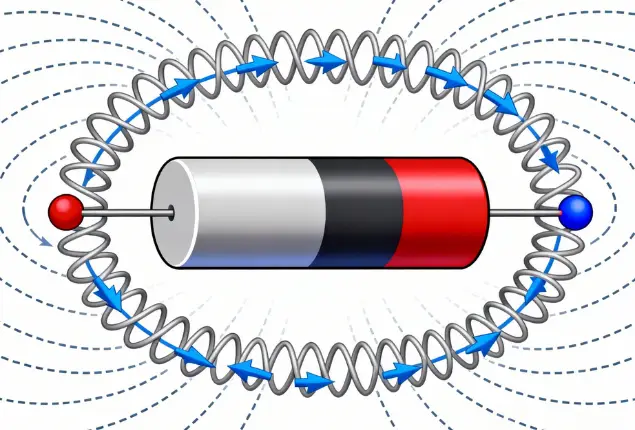
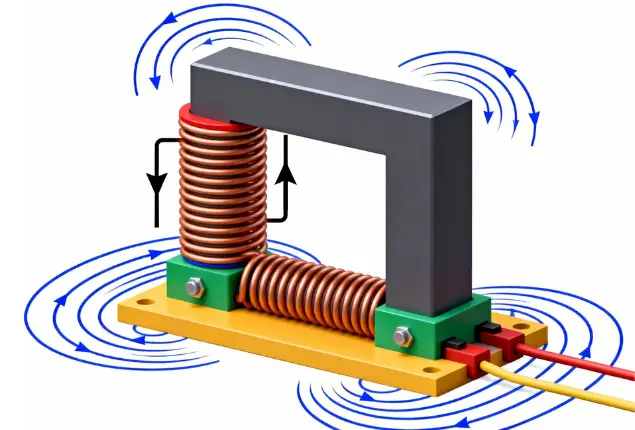
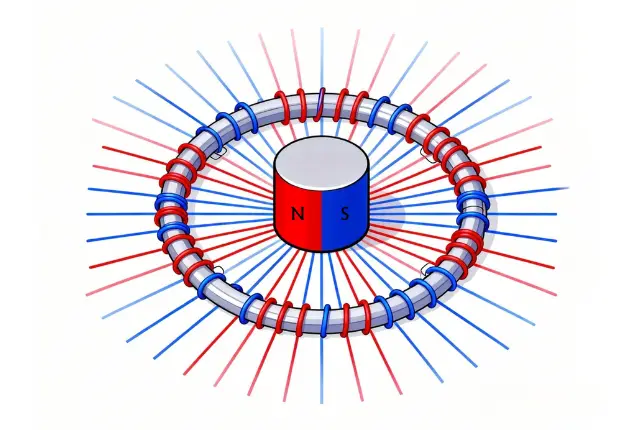
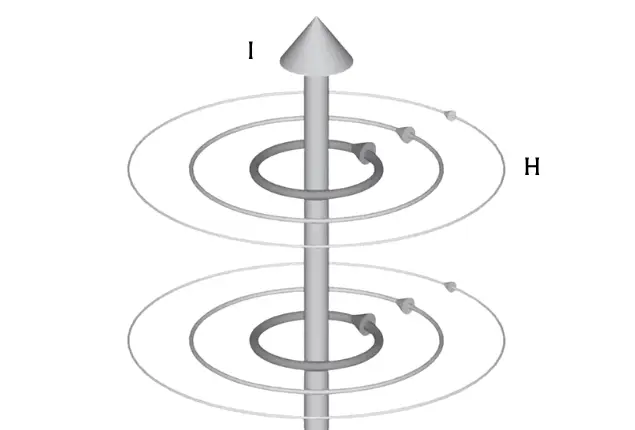 Magnetic susceptibility is a physical quantity reflecting the degree of magnetization within a material. When an external magnetic field is applied to atomic magnetic moments, it causes these moments to align in a macroscopically averaged sense. Magnetic susceptibility represents the remanence of a permanent magnet.
Magnetization intensity M is the vector sum of all atomic magnetic moments per unit volume. When these microscopic magnetic moments are completely randomly oriented, M = 0; when they partially or fully align under an external magnetic field, M becomes greater than 0, and the more aligned they are, the larger the M value.
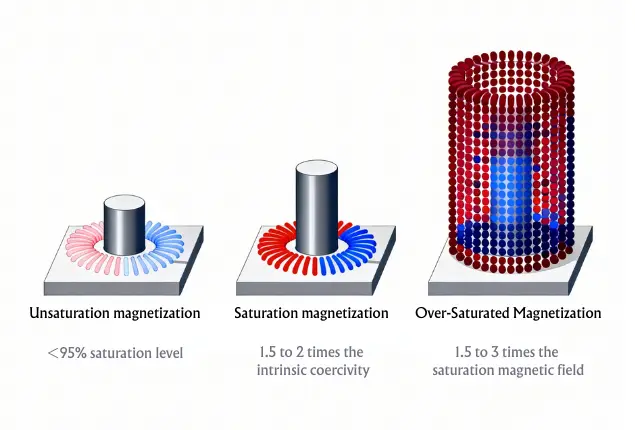 Unsaturated Magnetization: When magnetizing a magnetic material, the magnetizing energy does not reach more than 95% of the saturation level. This method is reversible, and over time, under the combined effects of time and external magnetic fields, the remanence of the magnet will gradually decline. A typical example is in certain magnetic encoders or sensors where the surface magnetic field strength needs to be at a very precise, non-maximum specific value. In such cases, unsaturated magnetization is achieved by controlling the magnetizing energy, followed by aging treatment to stabilize the magnetic performance at the desired “suboptimal” point. This method is only used in special applications and is generally not employed.
Saturated Magnetization: When magnetizing a magnetic material, the magnetizing energy reaches the level required for the material’s magnetization characteristic inflection point, generally 1.5 to 2 times the intrinsic coercivity of the material. This method allows the magnet to achieve saturated magnetization, and under normal circumstances, demagnetization will not occur.
Over-Saturated Magnetization: In engineering practice, the goal of over-saturated magnetization is to ensure that all regions and all magnetic domains within the material complete 100% reorientation and alignment. Due to possible microscopic inhomogeneities inside the material, the actual magnetic field strength used is typically 1.5 to 3 times the field required for saturation magnetization.
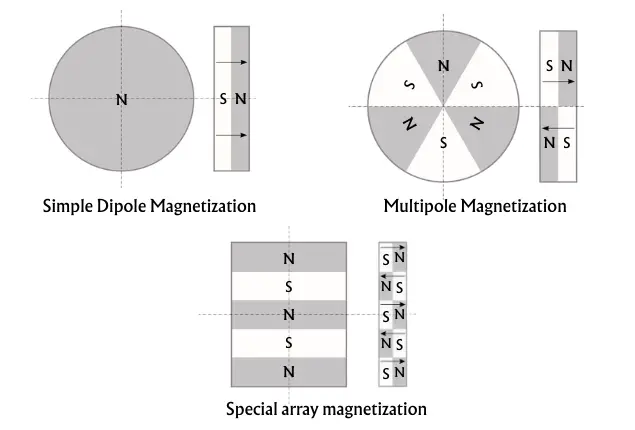 The main magnetization directions are simple dipole magnetization, multipole magnetization, and special array magnetization.
Simple Dipole Magnetization: This primarily makes the entire magnet behave as a simple magnetic dipole, including methods such as axial magnetization, radial magnetization, thickness-direction magnetization, axial multipole magnetization, inner circular magnetization, and radiation magnetization.
Multipole Magnetization: The surface exhibits multiple alternating magnetic poles. Custom magnetizing fixtures are used, resulting in multiple alternating N/S poles on the same magnet after magnetization.
Special array magnetization: It is a directional magnetization process for unitary magnets, aiming to create a unique Harbach magnetic field. Its core principle is to design different magnetization directions based on the magnet’s application orientation to maximize the magnetic field strength in the same direction. A Harbach array is a magnet combination structure. By combining permanent magnets with different magnetization directions, the magnetic field on one side of the array can be significantly enhanced, while the magnetic field on the other side can be almost negligible.
