One-stop magnet solutions > Innovation For Greener Tomorrow

Neodymium Magnet Engineering in Data Storage Systems

Hard disk drive magnets

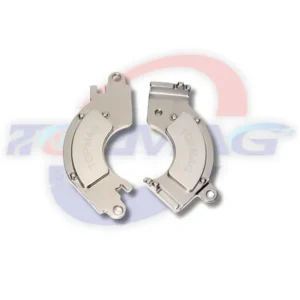
 Mechanical hard disk drives (HDDs) are marvels of modern technology, capable of storing vast amounts of data in a space smaller than a book. Inside a mechanical hard drive, there are typically two arc-shaped magnets made of neodymium-iron-boron, also known as neodymium magnets. These are among the strongest permanent magnets available, capable of generating intense magnetic fields. Picture a magnet just a few centimeters in size that can effortlessly lift the equivalent weight of a small dumbbell—that’s the remarkable power of a neodymium magnet!

These magnets are positioned above and below the actuator arm, creating a stable magnetic field, much like an invisible track guiding a high-speed train. This field enables precise movement of the actuator arm, allowing the read/write head to locate the correct position on the rapidly spinning disk platters.

At the end of the actuator arm is a voice coil. When electric current passes through the coil’s magnetic field, it interacts with the magnets’ field. This interaction, akin to two magnets pushing or pulling each other, causes the actuator arm to pivot.

By precisely controlling the current in the voice coil, the HDD can move the actuator arm and read/write head to specific locations on the platter. This process is lightning-fast, enabling the head to locate target data points in milliseconds, even as the platters spin at thousands of RPM.
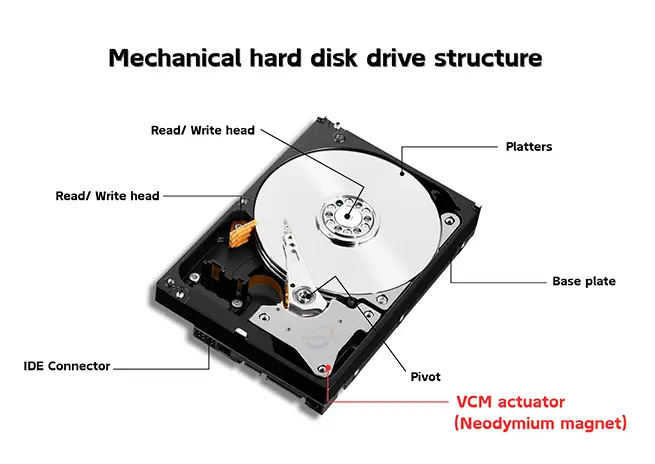
Mechanical hard disk drive structure

How Strong Are HDD Magnets?

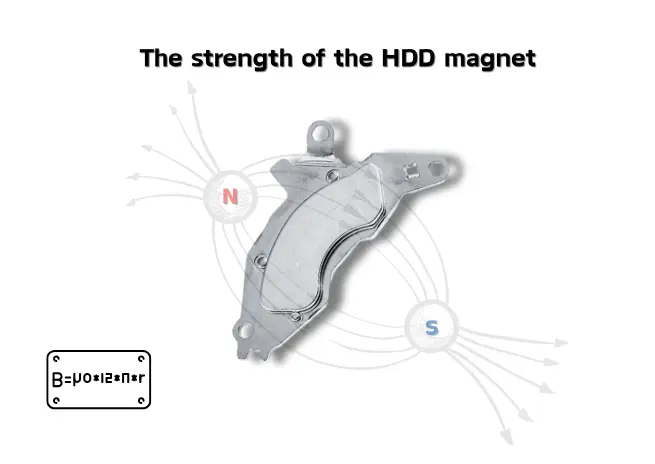
The strength of HDD magnets is measured in gauss. Typical HDD magnets have a surface magnetic field strength of 3,000 to 5,000 gauss, depending on their size and grade. For comparison, a refrigerator magnet is around 50 gauss, making HDD magnets tens or even hundreds of times stronger!

This strength translates to impressive physical force. A few-centimeter-long HDD magnet can generate enough attraction to lift several kilograms. In the HDD, this force enables the actuator arm to move rapidly and remain stable, meeting the demanding requirements of frequent data access. The magnets’ strength is carefully engineered. While they are immensely powerful inside the drive, their external influence is limited.

Unless brought into direct contact, HDD magnets typically do not interfere with other electronic devices. That said, placing them near credit cards or older magnetic storage media (like floppy disks) could potentially cause data loss.

The strength of the HDD magnet

Can Magnets Erase HDD Data?

In movies, like scenes from Breaking Bad, powerful magnets are shown erasing HDD data. But does this hold up in reality? Let’s break it down.

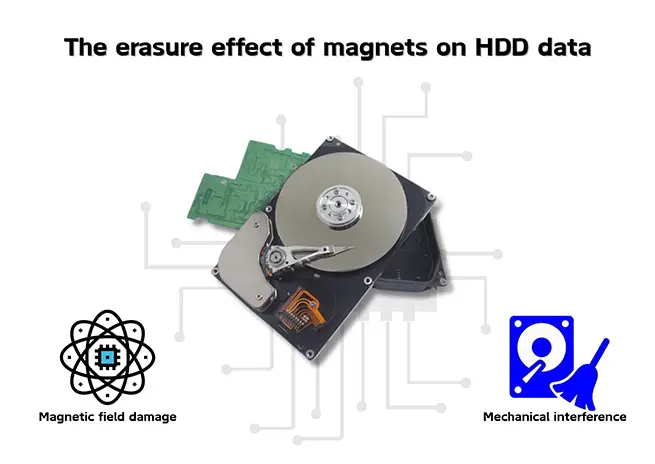
HDDs store data in tiny magnetic regions on the platters, which are sensitive to magnetic fields. In theory, a super-strong magnet in direct contact with the platters could disrupt these regions and corrupt data. However, HDDs are encased in metal shielding, and the internal neodymium magnets are already extremely powerful, making it difficult for typical household magnets to cause damage.

Experiments have shown that even attaching strong neodymium magnets to a running HDD, or causing mechanical interference with internal components, often leaves the data 100% intact. This suggests that physical destruction (e.g., shredding the drive) is a far more reliable method for data erasure. Meanwhile, solid-state drives (SSDs) and USB drives, which use flash memory, are entirely immune to magnetic fields.

The erasure effect of magnets on HDD data

Neodymium Magnets: Beyond HDDs and Their Eco Impact

Neodymium magnets are not exclusive to HDDs. They are widely used in the EV industry, wind turbines, and house appliances, which is a clear sign of how powerful and versatile they are. However, their application in manufacturing is detrimental to the environment. Mining rare earth elements like neodymium can pollute water and soil.

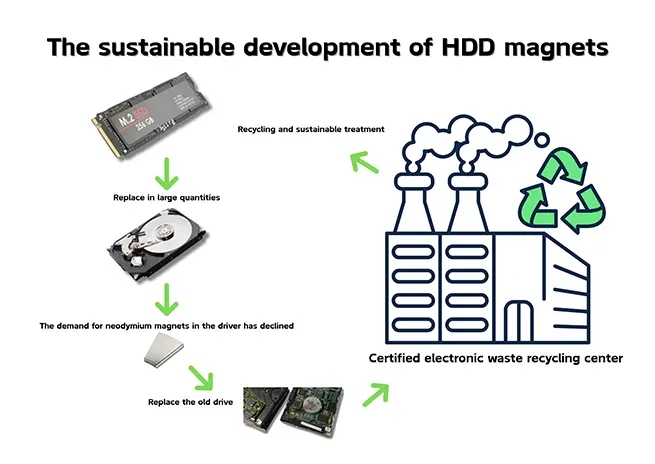
As SSDs increasingly replace HDDs, the demand for neodymium magnets in drives may decline. Still, responsible recycling of old HDDs remains crucial. The next time you upgrade your computer, consider taking your old drive to a certified e-waste recycling center to ensure the magnets and other components are disposed of sustainably, minimizing resource waste.

The sustainable development of HDD magnets

Conclusion

Though small, HDD magnets demonstrate the elegance of technology. By enabling precise data reading and writing, they power everything from personal computers to cloud data centers. They not only tell us about the mechanics of hard drives but also indicate how physics governs human activities in the digital age.

Picture of Ethan Huang
Ethan Huang

I'm dedicated to popular science writing about magnets. My articles mainly focus on their principles, applications, and industry anecdotes. Our goal is to provide readers with valuable information, helping everyone better understand the charm and significance of magnets. At the same time, we're eager to hear your opinions on magnet-related needs. Feel free to follow and engage with us as we explore the endless possibilities of magnets together!

All Posts

Elite Newsletter: Delivering Top-Tier Content Exclusively

Name