
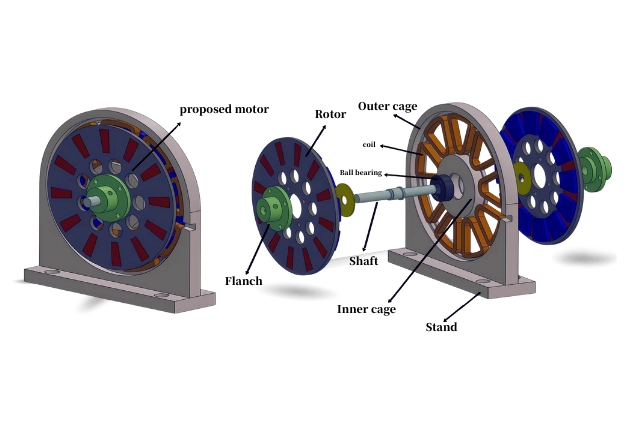
 The permanent magnet synchronous motor is the core driving force of new energy vehicles, due to its high efficiency, strong power and flexible design. Global electric vehicle markets have seen rapid growth, and PMSM is reshaping the future of the automotive industry with its excellent power density and energy-saving performance.
A permanent magnet synchronous motor is a three-phase AC synchronous motor. Its core is that the permanent magnets on the rotor generate a constant magnetic field, which interacts with the rotating magnetic field formed by the stator winding to drive the rotor to run at synchronous speed. Compared with traditional induction motors, PMSM has no slip loss. When the three-phase stator winding is energized, a rotating magnetic field is generated to achieve efficient and accurate power output.
PMSM is mainly composed of a stator and a rotor. The stator usually uses a laminated core of silicon steel sheets with windings, which is responsible for generating a rotating magnetic field; the rotor is embedded or surface-mounted with permanent magnets to provide a constant magnetic field. PMSM usually adopts an inner rotor design, but the outer rotor structure is also used in some high-efficiency household appliances.
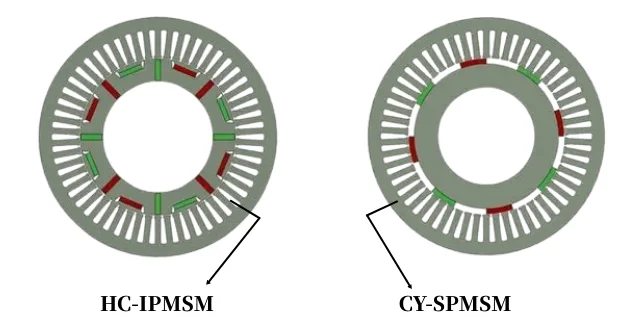
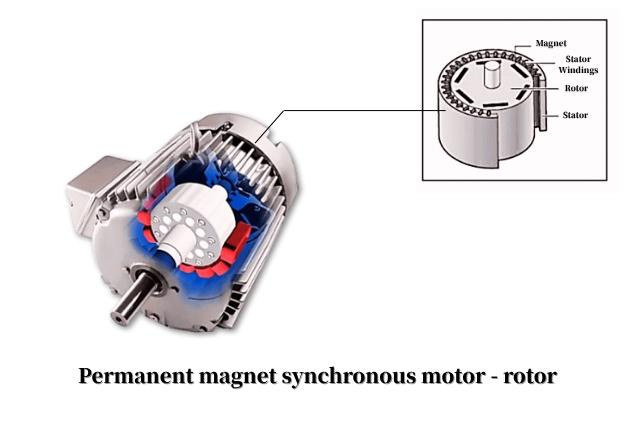 The rotor is the core component of the permanent magnet synchronous motor (PMSM), which determines whether the electric vehicle accelerates quickly and whether the endurance is longer. Its design is like the “core gear” of a car engine, and it brings strong power and a quiet experience by cleverly placing powerful magnets.
The rotor uses NdFeB magnets, a high-performance magnet that allows the motor to achieve 95% efficiency, saving 15% more power than traditional motors. For example, for an electric car with a range of 400 kilometers, this can add 50 kilometers, which is equivalent to fewer visits to the charging station. The rotor is made of thin steel sheets stacked and embedded in V-grooves to fix the magnets, reducing energy waste. At the same time, the optimized design makes the weight lighter and the acceleration more sensitive.
To make driving quieter, engineers adjusted the magnet layout to reduce the hum of the motor when it is running, and the noise is as low as 40 decibels, close to the quiet living room environment. Advanced manufacturing technology also ensures that the magnets operate stably at high speeds or high temperatures, with a failure rate of only 0.5%.
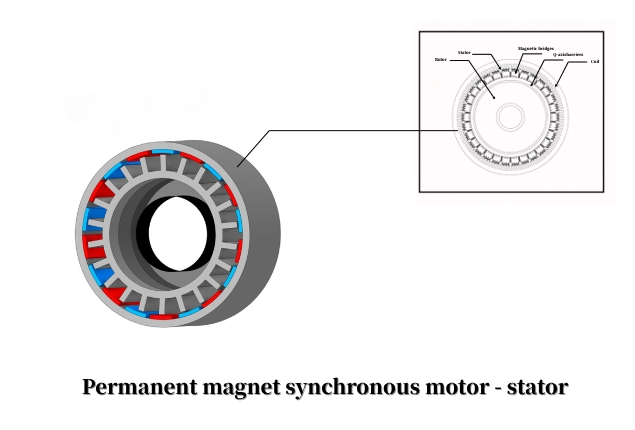 The stator design is critical to the performance of PMSM. The main drive motor of new energy vehicles generally uses distributed windings. The electromagnetic force distribution is optimized through evenly distributed windings, which effectively suppresses harmonics and improves efficiency and torque output quality. Compared with concentrated winding , the back electromotive force generated by distributed winding is closer to the ideal sine wave, with lower electromagnetic noise and higher control accuracy.
The stator design significantly improves NVH performance by finely optimizing the winding layout and electromagnetic force distribution. With the help of advanced electromagnetic field simulation, high-frequency harmonics can be reduced by up to 30%, meeting consumers’ high requirements for quiet driving. The compact stator structure design can also flexibly adapt to a variety of rotor topologies to maximize the use of the internal space of the motor.
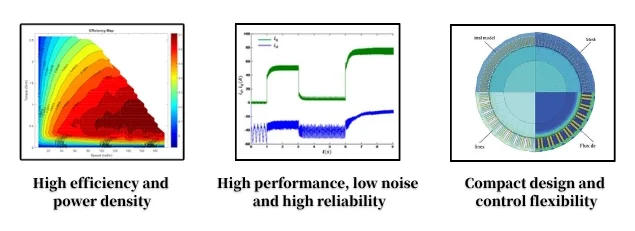
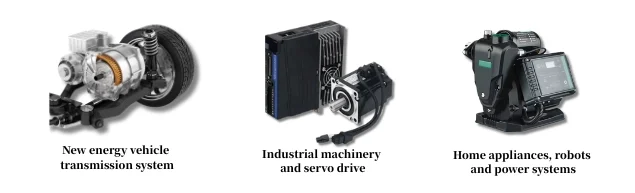
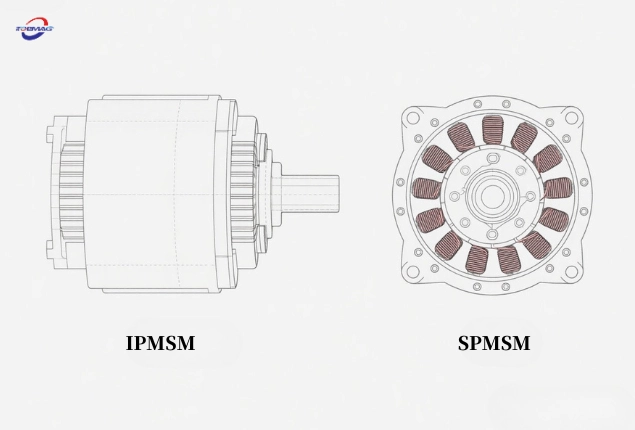 Permanent magnet synchronous motors have become core technologies in new energy vehicles and high-end industrial fields with their excellent efficiency, high torque density and compact design. IPMSM dominates the new energy vehicle traction market with its high torque density and broad speed regulation capability; SPMSM shines in the servo field with its fast response and cost advantages. The continuous progress of intelligent inverters and advanced sensorless control technologies continues to reduce system costs and improve performance.


