
 Magnets are one of the most important parts of everything. In different forms and functions, magnets have been a very big influence in our daily lives. Their peculiar physical characteristics, for example, have led to the progress of both technology and life. In such a way, they also become the main feature of practically all areas, from houses and medicine to transport, industry, and entertainment. This writing will be the big journey of the universal magnet application in everyday life, unveiling the hidden ways of their common yet impressive impact in the world, which continues to be the same.
 The kitchen is where the most direct and understandable implementation of magnets, such as refrigerator magnets, can be observed. Apart from their decorative purpose, these small items are the perfect holders of notes, photos, or children’s drawings, and can also be used to decorate your refrigerator uniquely. Neodymium iron boron (NdFeB) magnets are typically used to make high-quality refrigerator magnets, which are a kind of rare earth magnet with ultra-strong magnetic force that tightly sticks to metal surfaces and thus ensures that the items do not fall easily. Quite a few families use alphabet magnets to write letters for fun just because, for example, on the fridge doors, such a message as “Pizza tonight” may be spelled out.
The magnetic strips found on refrigerator doors also take advantage of magnets. The normal permanent magnet strip that is flexible and made of ferrite material is embedded in the refrigerator door’s sealing gasket. The refrigerator sticks firmly to the metal frame of the fridge, which is the closest point through which the air can be infiltrated. This is the reason why your food stays fresh. Have you ever felt a soft shove that drags the door back when it has been closed? That’s the work of the magnet. Moreover, the magnetic door seal is not only part of the freezer but also in the microwave oven, making the modern kitchen more practical and convenient.
 Magnetic knife racks found in the kitchen are generally powerful magnets that hold knives firmly on the wall so they are easily accessible. The strong holding force of neodymium magnets makes it possible for even the heaviest knives to be hung, thus there is no chance of a slip like in traditional knife racks. Besides that, magnetic knife racks are also used in tool rooms to hold metal tools such as wrenches and screwdrivers to improve work efficiency.
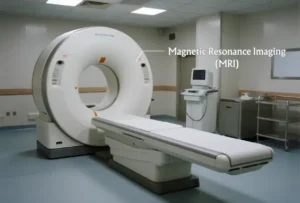 Magnet technology is very important in the medical field as a magnetic resonance imaging (MRI) system. MRIs use superconducting electromagnets to create a strong magnetic field. When radiofrequency pulses hit these atoms, they only give very weak electromagnetic signals. These signals are captured and converted into high-resolution 3D images, showing the subtle structures of the brain, spinal cord, heart, joints, etc.
MRI superconducting magnets are traditionally wire coils made of niobium-titanium alloy that are put into liquid helium and cooled to -270°C to allow the superconducting state to be reached. The magnetic field thus created is a strong and stable one without resistance. The non-invasive disease detection procedure is, besides the image quality improvement, one of the advantages of the technology. MRI is widely used in the diagnosis of brain tumors, ligament tears, and heart defects, to name a few, thus helping doctors make the right treatment plan. The safety characteristic of MRI as a radiation-free method of diagnosis, as opposed to X-rays or CT scans, makes it very beneficial, especially for pregnant women and patients who need frequent examinations. This instance of magnet utilization in healthcare has been a major milestone in the progress of medical science.
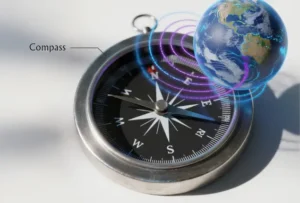 Over the years, the compass has been a prime example of magnetism at work in navigation; it has been a trusty companion to the Earth’s sailors and navigators, and aviators just about everywhere for a very long time. A small permanent magnet, the compass needle, takes a stab at Earth’s magnetic field and points its way to magnetic north. Through history and with the development of technology, this simple physical principle has turned the compass into an essential instrument in the search for wilderness, the sailing courses, and the skies. The Sinan (Sinan) symbol, which was an invention of ancient China, was the first magnetic navigation device, and today compasses have gotten even more accurate and portable.
For instance, you can craft a very basic compass using everyday home stuff: paste a magnetized cork and set it inside a water bowl. The needle will immediately arrange itself with the Earth’s magnet and point north. Not only is this a really neat experiment that shows off the power of magnets, but it also gets the kids thinking about science. In modern technology, the compass principle is also used in smartphone magnetometer sensors, helping users determine direction in navigation apps. The use of magnetism in this way is still very popular, even in the digital era.
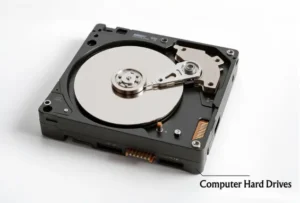 On the other hand, the digital era is quite different. Magnets are still very much around but are integrated differently; they are the core components of computer hard drives (HDDs). Hard drives are places where data is stored by magnetizing the smallest parts on the disk surface; each area represents binary information (0 or 1). The read/write head, which holds the electromagnets, constantly switches the magnetic polarities of these small areas, which is how the data is written and read. Hard drives also have three permanently magnetized parts: an actuator that is in charge of the movement of the read/write arm, a read/write head that is the part where data manipulation takes place, and finally a spindle motor, which is the part that allows for the high-speed rotation of the platters.
A typical 1TB hard drive boasts a storage density of hundreds of billions of bits per square inch, thanks to the precise control of the magnets. The powerful magnetic force of neodymium magnets and the fast response of the electromagnets enable hard drives to process vast amounts of data at astonishing speeds. This application of magnets enables our digital lives to run efficiently.
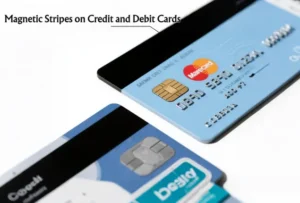 The magnetic stripe on the back of your credit or debit card is really a small wonder of magnetic technology. It is made up of ferromagnetic particles, which hold data such as the account number and the name of the cardholder. The machine reads the magnetic pattern of the strip when the card is passed, and the transaction is then authorized. This easy and safe method, in fact, facilitates money movements, and at the same time, it also raises the safety level. Every time you swipe your card at the supermarket, the magnetic stripe instantly transmits information, bridging it to the bank’s system to complete the payment.
Although NFC and chip cards are gradually replacing magnetic stripe cards, they are still used worldwide due to their low cost and wide compatibility. Remarkably, the magnetic stripe’s small storage capacity is sufficient for everyday transactions, demonstrating the powerful capabilities of magnets in a tiny space.
 Magnets are the most important parts of electric motors and generators, which are the sources of the energy that keep appliances running in your house, as well as machines at factories. The process of electric motors starts with a magnetic field, which is produced by either permanent magnets or electromagnets; consequently, this field interacts with the electromagnetic force, which is produced by a current running through the coil, and finally, this force changes into the rotational one. Thus, the appliances in your house, the washing machines, and the electric vehicles are only a few examples of e-motors working on the magnetic principle. Tesla electric motors are equipped with strong neodymium magnets, which allow them to have high torque and efficiency, thus enabling emission-free driving.
Generators operate differently, as they exploit the force of a human to turn the magnets inside coils; as a result, an induced current is created, which provides the necessary electricity to the grid. Wind turbines are installed by generators that employ magnets as an essential part of the whole mechanism, which will be a renewable energy source. Magnets are the ones that convert energy from mechanical to electrical form in the most efficient way. One could say that the energy conversion function of the magnets backs up the enormous energy requirements of modern society.
 Induction cookers heat metal cookware through electromagnetic induction, a new way of using magnetism in the practical world. When current passes through the coils of the insulator’s induction cooker, an alternating magnetic field is created, which generates eddy currents in the iron pot’s base by magnetic induction. As a result, it heats very fast. Compared to traditional gas stoves, induction cookers offer quicker heating and save up to 70% of energy with precise control. Induction cookers can boil rice quickly without a fire, thus ensuring a safe kitchen. This technology, which is present in both home and professional kitchens, makes the users aware of the involvement of magnets in energy-saving technology.
 Magnetic levitation trains are the next step in the remarkable development of magnetic technology in transportation. The Meissner effect is the phenomenon used to levitate the train about 1 centimeter above the track without friction, which is the reason why the levitation force is generated through superconducting electromagnets installed on the train’s underside, which oppose the magnetic field coming from the guideway. Superconducting magnets need to be very cold, almost at absolute zero. Still, the very strong magnet they make assures a peaceful and energy-saving operation, thus, a great future for transportation is becoming clear.
 In industry, powerful electromagnets and permanent magnets are the most common solutions to lift and move metal parts. Large lifting magnets at construction sites can lift heavy steel beams, pipes, or plates of various kinds, while scrap yard electromagnets sort ferrous metals. Auto recycling plants use electromagnets to separate steel efficiently, thus the recycling procedure is accelerated. The special feature of electromagnets is that they change the magnetic field by turning on and off the electric currents, which makes picking up and releasing heavy objects very easy.
 Magnets are commonly found in a speaker and an electric buzzer, as they are the parts that convert electrical signals into sounds. The electromagnetic coil of a speaker moves in the magnetic field of a permanent magnet, thus exciting the diaphragm and emitting sound waves. Hi-fi audio systems employ neodymium magnets to offer excellent sound quality, deliver a strong listening experience, and effortlessly activate alarms. Such magnets can be found everywhere.
 Magnets will always be a source of amusement for children, who will still find new ways to play with their toys. Magnetic building blocks just magnetically click together, and children can rapidly create complex figures, and they can also spark their imagination. Wagons of toy trains are equipped with magnets so that they can be easily connected; thus, the process of a real railway is being simulated. LEGO’s magnetic sets enable children to create models of movable gadgets and also to keep their engineering skills growing. Besides, magnetic toys are often promoted as educational tools for little kids who have just started to learn spelling. The fun and security of magnets have turned them into the ideal choice for making toys.
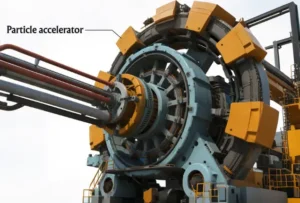 In the scientific world, magnets are the lifeblood of gadgets like particle accelerators and mass spectrometers. Cyclotrons employ powerful magnetic fields to energize charged particles in a circular motion and thus be able to examine the atomic nuclei’ structure. CERN’s Large Hadron Collider uses superconducting magnets to create magnetic fields of up to 8 Tesla, thus driving particles to almost the speed of light and recreating the birth of the universe. These revolutionary applications acknowledge the indispensability of magnets in frontier scientific research and promise to reveal the secrets of matter.
 On the other hand, magnets are not only game changers in science but have also found their way into fashion and portability. Many high-end handbags, backpacks, and jewelry feature magnetic clasps. Such locks incorporate a small number of permanent magnets, thus giving a secure and simple-to-operate fastening mechanism. Several wallet models from famous brands use magnetic clasps for easy and quick closure, thus giving an equilibrium between looks and functionality. For those without pierced ears, magnetic clasp earrings fasten the earlobe with a magnetic force, thus being both comfortable and stylish.


