
Ultimate Guide to Coating Selection for NdFeB Magnets 2026
- イーサン
- 知識ベース
内容
要点
- NdFeB magnets corrode easily—coating is essential.
- Which magnet coating to choose? Ni-Cu-Ni is the most versatile, epoxy excels in corrosion resistance, Parylene is premium, and zinc is economical but dry-indoor only.
- Rule of thumb: zinc/nickel for indoor, epoxy/Parylene for marine/chemicals, Ni-Cu-Ni for high heat.
- Avoid mistakes: no pure zinc/nickel in marine, no epoxy above 150°C, use hydrogen baking for load-bearing parts.(Salt spray test >500 hours for harsh environments.)
- Coatings don’t raise temperature limits—exceed the magnet’s rating (e.g., ~80°C for N-grade) and it still demagnetizes.
Why Coatings Are Critical for NdFeB Magnets?

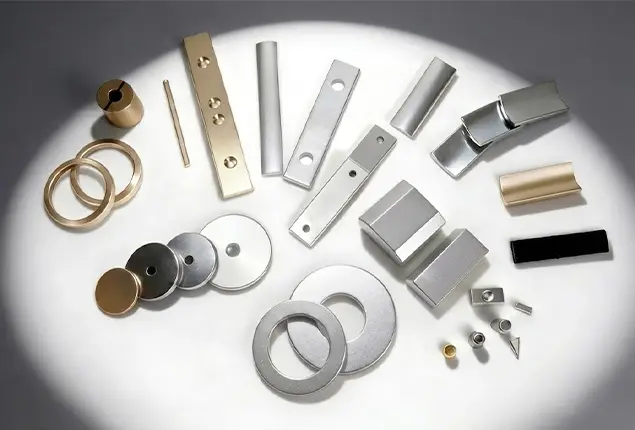
The Inherent Weakness of NdFeB
Protective Functions of Coatings
- Corrosion protection: Forms a physical barrier against oxidation and chemical attack.
- Improved mechanical strength: Enhances hardness, prevents edge chipping, boosts wear resistance, and extends service life.
- Enhanced appearance: Delivers a uniform metallic finish.
Mainstream Coatings Explained and Compared
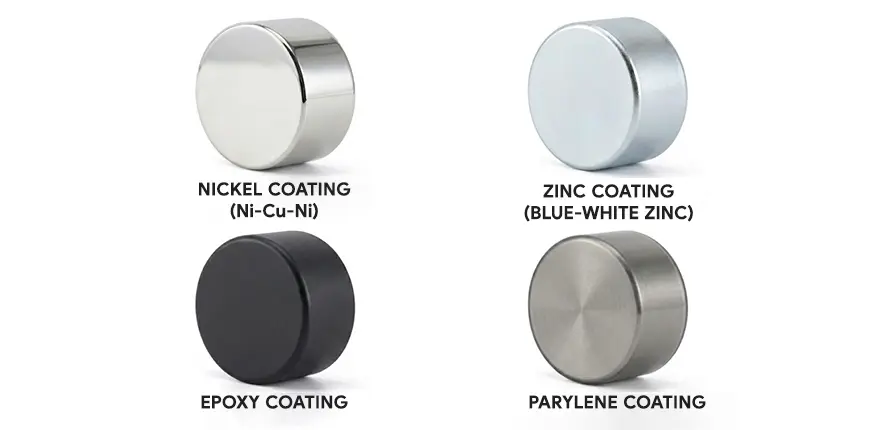
| Characteristics | Zinc Coating | Ni-Cu-Ni Coating | Epoxy Coating | Parylene Coating |
|---|---|---|---|---|
| Salt Spray Test | General (24–72h) | Moderate (48–96h) | High (>500h) | Ultra-High (>1000h) |
| 耐食性 | 一般 | 中程度 | 高い | ウルトラハイ |
| Coating Thickness | Thin–Medium (5–15 μm) | Medium (15–21 μm) | Thick (20–28 μm) | Ultra-Thin (Micron Level) |
| Conductivity | Conductive | Conductive | Non-Conductive | Non-Conductive |
| Abrasion Resistance | Medium–Low | 高い | 中程度 | 中程度 |
| Chemical Resistance | 一般 | 中程度 | 高い | 素晴らしい |
| コスト・レベル | 最低 | Low–Medium | ミディアム | 高い |
| Biocompatibility | 一般 | General (Nickel allergy risk) | General (Medical grade optional) | Excellent (Medical grade standard) |
| Processing Method | Electroplating (Simple, high-speed mass production) | Electroplating (Mature & reliable) | Dip/ Spray Coating (Medium difficulty) | Vacuum Deposition (Professional & complex) |
Ni-Cu-Ni Coating
- EV motors and automotive components (IATF 16949 compliant)
- Industrial motors, sensors, and magnetic separators
- Consumer electronics (speakers, wireless chargers, smartphones)
- Indoor and mild outdoor applications (industrial fixtures, small wind turbines)
Zinc Coating
- General electronic parts (toy magnets, simple sensors, enclosure magnets)
- Hardware products (magnetic door/window catches, hanging fixtures, fastener magnets)
- Low-end industrial equipment (conveyors, basic instruments)
- High-volume consumer products (magnetic stationery, small appliance magnets)
Epoxy Coating
- Offshore wind turbines and marine equipment (saltwater exposure)
- Chemical processing equipment and sensors
- Outdoor industrial applications (construction machinery, agricultural equipment)
- Magnets requiring adhesive bonding (transparent epoxy)
Parylene Coating
- Aerospace components (high temperature, vacuum, chemical exposure)
- Medical devices (MRI machines, surgical tools, implantable devices)
- Extreme-temperature industrial equipment (oil and gas drilling tools)
- Precision micro-sensors and electronics (tight coating thickness requirements)
Other Special Coatings
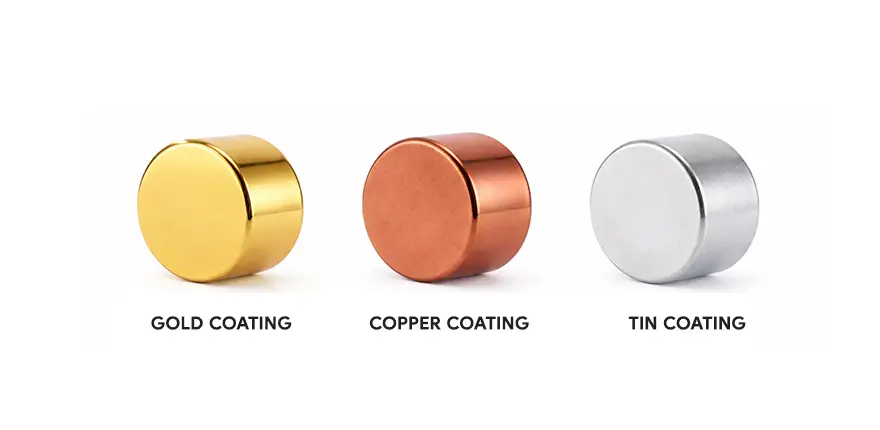
Tip: Injection overmolding is a complementary protection process used alongside coatings. When coatings cannot withstand extreme impact, plastic overmolding absorbs shock energy, prevents magnet cracking, and completely seals out corrosive media. In practice, a “coating first, then overmolding” combination is often used.
How to Select the Right Magnet Coating
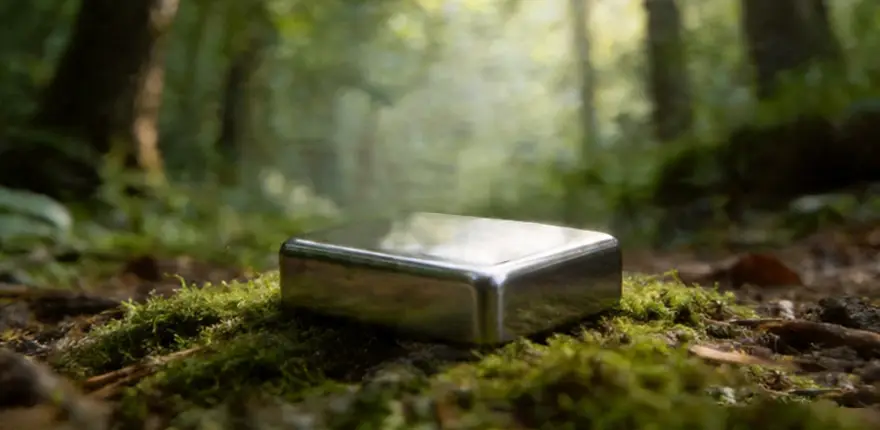
First Factor: Operating Environment
- Dry indoor environments (toys, office equipment, indoor sensors): Zinc or nickel coating provides basic rust protection. Zinc is more cost-effective; nickel offers better appearance and wear resistance. Choose based on cost and aesthetic needs.
- High humidity or marine environments (outdoor equipment, marine instruments, automotive exterior components): Epoxy coating or a Ni-Cu-Ni + epoxy dual coating is the best choice. Epoxy effectively blocks moisture and salt spray. The dual coating is suitable for extreme marine environments, combining mechanical strength with corrosion resistance.
- Chemical exposure environments (acids, alkalis, industrial solvents): Chemicals can damage standard coatings, requiring an inert protective barrier. Use PTFE (Teflon) or Parylene—both are chemically inert.
- High temperature environments (≤200°C): High temperatures can cause coating cracking or accelerated oxidation. Ni-Cu-Ni has good thermal stability. Epoxy coatings degrade above 150°C.
- Medical or precision electronics environments: Parylene offers ultra-thin, pinhole-free properties, excellent dielectric performance, and chemical resistance—meeting the stringent requirements of aerospace and medical applications. Its biocompatibility also complies with medical standards.
Consider Process Limitations
- Hydrogen embrittlement: Hydrogen released during electroplating can cause magnets to crack under stress. Load-bearing parts must undergo hydrogen relief baking.
- Dimensional deviation: Coating thickness typically ranges from 10–30μm. Precision-fit parts require tolerance allowances to avoid assembly jamming.
Balance Cost and Service Life
- Consumer-grade products (toys, low-end stationery): Prioritize cost. Choose zinc or thin nickel for basic short-term rust protection.
- Industrial-grade products (general industrial motors, power tools): Prioritize value. Choose zinc-nickel alloy or standard-thickness Ni-Cu-Ni (15–25μm per side)—the most cost-effective option.
- High-end or automotive-grade products (critical automotive components, outdoor base station equipment): Prioritize reliability. Recommend epoxy + nickel composite or Parylene. These solutions require a neutral salt spray test of >500 hours.
Key Points to Confirm Before Ordering (Recommend Including in Technical Agreement)
- What is the neutral salt spray test duration without red rust? This is the most direct indicator of corrosion resistance.
- Is hydrogen relief baking required? Necessary if the magnet will bear mechanical stress.
- What are the coating adhesion (cross-cut test) and thickness range? Thickness should comply with drawing tolerances.
- Will the coating baking temperature affect magnet performance? For example, N-grade NdFeB has a maximum operating temperature of only about 80°C. If the coating curing temperature exceeds this, irreversible demagnetization will occur.
- What are the environmental compliance requirements? RoHS restricts hazardous substances such as hexavalent chromium and lead.
Pitfalls to Avoid
- Avoid pure nickel or pure zinc coatings in marine environments (neutral salt spray test typically <72 hours).
- Avoid epoxy coatings in 高温環境 (>150°C).
- Avoid using electroplated magnets without hydrogen relief baking for load-bearing structures.
Scientific Selection for Long-Term Protection
- Ni-Cu-Ni: The versatile, high-value choice for most applications.
- Epoxy: An excellent choice for harsh, chemically aggressive environments.
- Parylene: The premium standard for 高温, medicalそして aerospace applications.
よくある質問
Is thicker coating always better?
Epoxy coating is vulnerable to scratching. How can I prevent protection failure?
What is the difference between epoxy coating and rubber overmolding?
Can a rusted magnet be repaired?
Does coating change the magnet's operating temperature?
Ni-Cu-Ni vs epoxy — which one is better?
Ni‑Cu‑Ni offers better corrosion resistance, adhesion, and conductivity; epoxy is cheaper and faster but less durable in harsh environments. Choose Ni‑Cu‑Ni for performance, epoxy for cost‑sensitive applications.
さらに詳しい洞察については、以下の関連ブログをご覧いただきたい:
How to Separate Strong Magnets
グローバルマグネットサプライヤーTOPMAG:2025広州交易会
プロジェクトをアップグレードする準備はできていますか?TOPMAGの全製品をご覧ください!🧲。

私は磁石に関するポピュラー・サイエンスの執筆に専念している。私の記事は主に、磁石の原理、応用、業界の逸話に焦点を当てています。読者の皆様に価値ある情報を提供し、磁石の魅力や意義をより深く理解していただくことが目標です。同時に、磁石にまつわる皆さんのご意見もお待ちしています。磁石の無限の可能性を一緒に探っていきましょう!