A comprehensive guide to degaussing methods
Magnets are everywhere in our lives, and they all show their unique charm. However, sometimes the magnetism of magnets may interfere with the operation of equipment or require safe handling, and demagnetization becomes critical. This article will explore the scientific principles of demagnetization, the main methods, providing readers and engineers with a comprehensive and practical guide.
What is demagnetization?
Demagnetization refers to the process of weakening or completely losing the magnetic field of a magnet or magnetic material by destroying the orderly arrangement of magnetic domains inside the magnet or magnetic material. The magnetism of permanent magnets comes from tiny magnetic domains inside the material. These magnetic domains are like miniature magnets. They show strong magnetism when all the magnetic domains are oriented in the same direction. The aim of the demagnetization process is to break the magnetic domains and make them disordered. The magnetic field is weakened or removed.
Common permanent magnet materials include neodymium iron boron (NdFeB), samarium cobalt (SmCo), aluminum nickel cobalt (Alnico), and ferrites (ceramic magnets).
The scientific principle of magnetization and demagnetization
1.Magnetization process
When ferromagnetic materials are exposed to an external magnetic field, the basic magnets inside them are affected and gradually arranged neatly in the magnetic domains. As the magnetic field increases, the magnetic flux increases, the domain walls move, the domains expand, and finally reach a state of magnetic saturation, forming a single large magnetic domain. At this point, the material retains remanence and becomes a permanent magnet. This magnetization process is the core of the function of the magnet.
2.Demagnetization principle

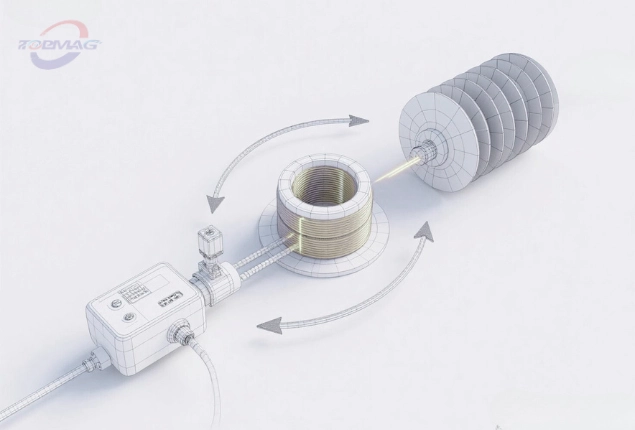
The essence of demagnetization is to change the magnetic domains from ordered to disordered through external intervention and restore the fine magnetic domain structure. Successful demagnetization requires applying an appropriate field strength and ensuring that the magnetic field strength gradually decreases to achieve uniformity between the internal and external magnets. The demagnetization power is determined by the field strength, which is closely related to the current, coil opening, coil length, and number of turns.
Main causes of demagnetization of permanent magnets
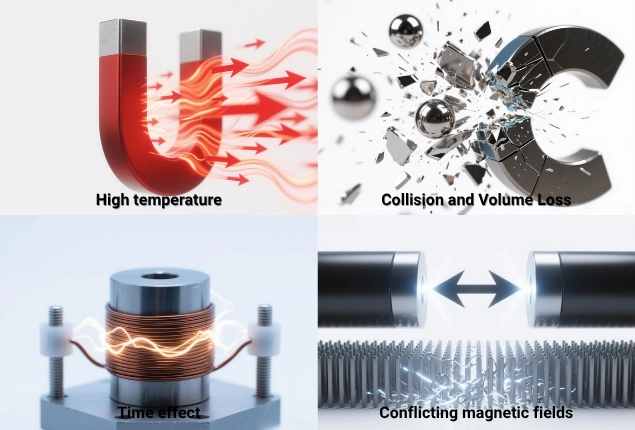
Although permanent magnets are designed to maintain magnetism for a long time, demagnetization will still occur under certain conditions. The following are the three main factors that lead to demagnetization:
1. High temperature
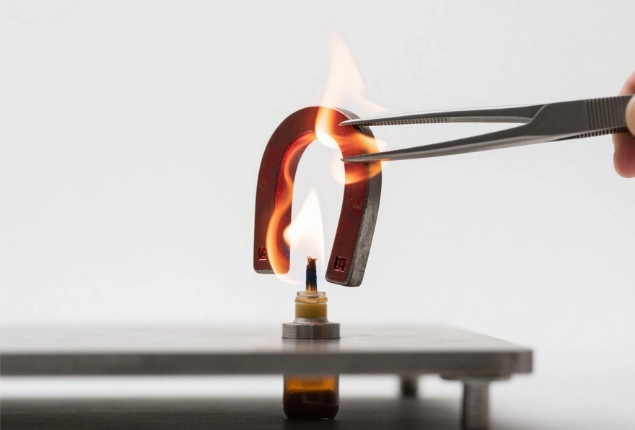
High temperature is often the cause of thermal demagnetization. Because of the increased thermal agitation at higher temperatures, the magnetic domains get disordered due to the loss of their ordered alignment. There is a specific temperature called the Curie point of a magnetic material, beyond which the material cannot be magnetized, and it will become irrevocably demagnetized. The Curie temperatures of common permanent magnets are as follows:
NdFeB: about 100–150°C.
SmCo: about 350°C.
AlNiCo: about 540°C.
Ferrite: about 450°C.
Even if the Curie temperature is not reached, approaching it will result in some demagnetization, the extent of which is described by the material’s demagnetization curve. Neodymium magnets are particularly sensitive to high temperatures, while SmCo and AlNiCo are more stable at high temperatures. When designing, you can use the Permeability Calculator to assess the risk of demagnetization for a particular magnet at operating temperature.
2. Collision and Volume Loss
The mechanical stress may cause the magnet’s atomic structure to get messed up, and the magnetic domains may become disordered. In addition, moisture that results from a humid atmospheric condition can cause corrosion that will lead to the loss of the material’s properties, the magnet’s structural integrity will be affected.
3. Conflicting magnetic fields
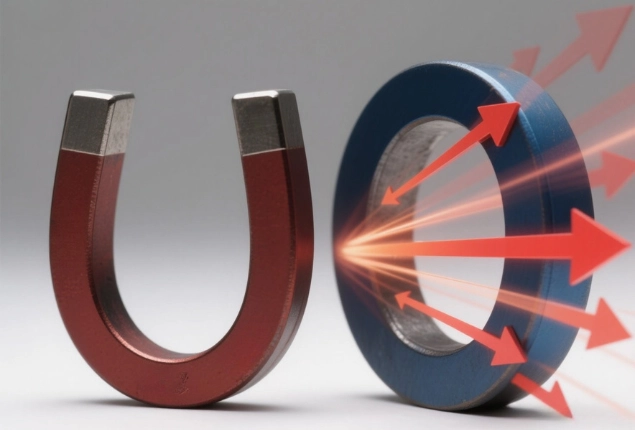
An external magnetic field that is oppositely directed can affect the domains of the magnet that are in the ordered arrangement of the demagnetization process. The changing magnetic field that is created by the alternating current can cause the domains of the magnet to be changed, thus the magnet will have less magnetic strength than before. Magnets that are kept under the best conditions of storage may go a long way in reducing the effects of the interfering magnetic fields.
4. Time effect
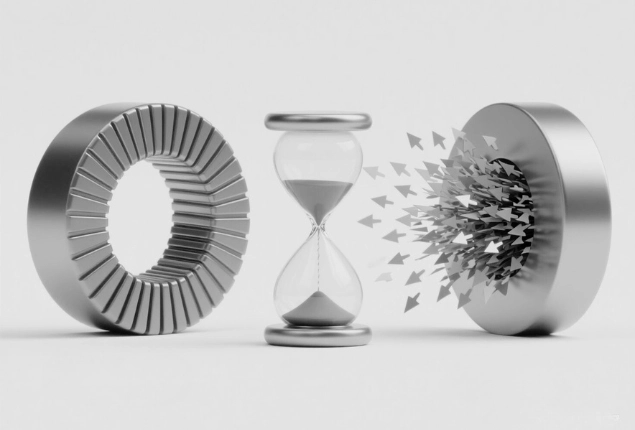
Although permanent magnets are designed to maintain their magnetism for a long time, long-term exposure to high temperatures, conflicting magnetic fields, or small vibrations can cause gradual demagnetization. Samarium cobalt magnets may take hundreds of years to completely lose their magnetism, while weaker temporary magnets may demagnetize in minutes.
Proven demagnetization methods
There are lots of different ways to demagnetize, and the correct method will rely on the exact job and the magnet properties. The five most commonly used five main demagnetization techniques are:
1. Heating
When a magnet is heated above its Curie temperature, the magnetic domains are disordered due to the violent movement of atoms, and the magnetism is permanently lost. Even if the Curie temperature is not reached, heating can weaken the magnetism.
Iron: 770°C
Nickel: 354°C
Cobalt: 1115°C
Note: High temperature may cause deformation or damage to magnet materials. Use with caution. Suitable for scenarios where the integrity of the magnet does not need to be preserved.

2. Impact
Using mechanical impact, like hitting or dropping the magnet with a lot of force, unintentionally changes the internal magnetic domains, and consequently, the magnetic field strength decreases. The method is very simple and easy, but to get the demagnetization effect you want, you need a really big mechanical force. This method can lead to the magnet being structurally damaged, and it is generally done to magnets of low value or those that are going to be thrown away.

3. Alternating magnetic field
The magnetic domains inside the magnet are disordered by applying an alternating magnetic field through the coil. This method uses alternating current to generate an alternating magnetic field to offset the original magnetic field of the magnet.

4. Reversing the magnetic field
Place the magnet inside a powerful magnetic field in the opposite direction, and quickly cut off the reversed magnetic field after use to reduce the residual magnetism to a minimum.

Conclusion
Demagnetization is a field that combines scientific principles with applied technologies. The field includes a spectrum of methods that range from simple thermal to advanced pulsed demagnetization. Understanding the factors that cause demagnetization, choosing the best demagnetization method, and including demagnetization prevention in the design process can greatly improve the performance and reliability of magnet applications. This guide is written to provide you with the essential information and useful suggestions to make your magnet applications more efficient.

I'm dedicated to popular science writing about magnets. My articles mainly focus on their principles, applications, and industry anecdotes. Our goal is to provide readers with valuable information, helping everyone better understand the charm and significance of magnets. At the same time, we're eager to hear your opinions on magnet-related needs. Feel free to follow and engage with us as we explore the endless possibilities of magnets together!