
 The Indian government is actively formulating a policy similar to the Production-Linked Incentive (PLI) scheme, aimed at promoting the domestic production of rare earth magnets to significantly reduce reliance on imports from China and address uncertainties in the global supply chain. Rare earth magnets, as high-performance materials, play an indispensable role in electric vehicles, renewable energy, defense equipment, and consumer electronics. China currently controls about 90% of the world’s rare earth processing capacity and will impose strict export restrictions from April 4, 2025, posing a serious challenge to the supply chain security of India’s key industries. To address this, the Indian government is adopting a multifaceted strategy to accelerate the development of a domestic rare earth magnet supply chain, enhance self-sufficiency, and support the energy transition and sustainable development of the manufacturing sector.
Looking for a india magnet supplier? TOPMAG offers one-stop solutions for magnets and magnetic accessories
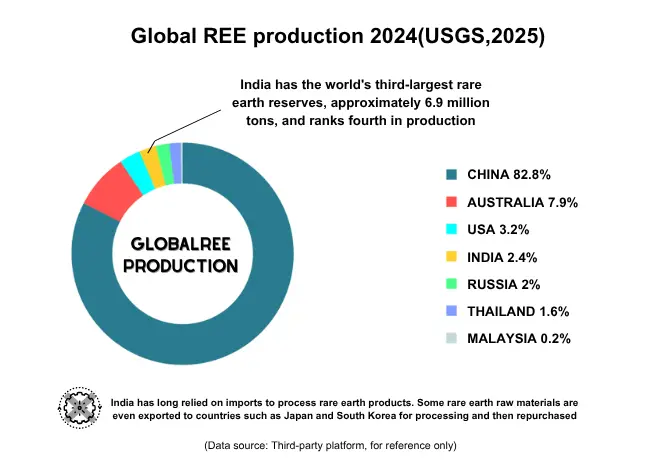
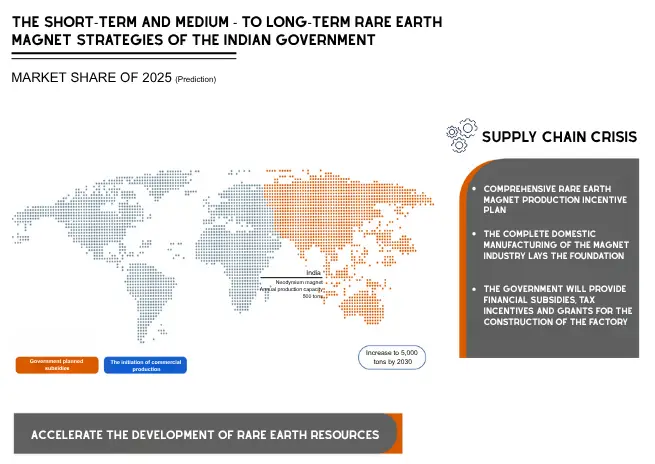
 To achieve long-term self-reliance in rare earth magnet production, the Indian government has been actively pursuing public-private partnerships (PPPs) with startups, research institutions, and large manufacturers to address technical and financial challenges. The production process of rare earth magnets is very difficult as it involves highly technical steps such as smelting, separation, and processing, areas in which India currently lacks extensive experience.
Under the ‘National Critical Minerals Mission,’ the government is developing plans to establish a dedicated innovation fund for startups to develop advanced processing technologies and equipment. Meanwhile, government agencies are consulting with automotive industry groups to look for opportunities to apply the Production Linked Incentive (PLI) scheme, aimed at attracting more investment in rare earth magnet manufacturing facilities.
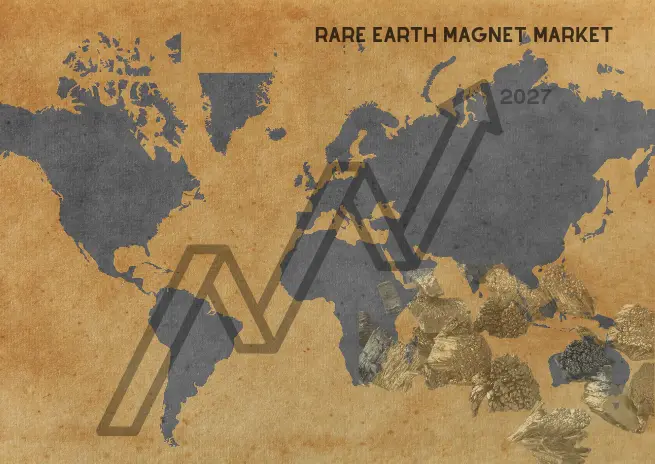
In the medium and long term, India’s abundant rare earth resources, strong government support, and growing domestic demand make it an important player in the global rare earth supply chain. The Automotive Industry Association projects an optimistic outlook for the Indian electric vehicle sector, suggesting it could meet nearly all its rare earth magnet requirements by 2027 if domestic production capacity continues to improve. Furthermore, the clean energy sector’s rapid growth will serve as a key driver for sustained demand in the rare earth magnet market.


