
Guide to Magnetic Assemblies
- イーサン
- 知識ベース
In modern industry, 磁気アセンブリ are far more than simple combinations of magnets. They are integrated products engineered through optimized magnetic circuit design. By optimizing magnetic flux paths and structural encapsulation, magnetic assemblies achieve efficient magnetic flux concentration, stable magnetic output, and reliable protection, enabling them to meet the demands of complex industrial applications.
With the rapid growth of new energy vehicles, intelligent manufacturing, and industrial automation, the demand for high-performance customized magnetic assemblies continues to increase. Backed by extensive magnetic material expertise and engineering capabilities, Topmag provides efficient, reliable, and value-added magnetic solutions tailored to different application requirements.
内容
要点
- agnetic assemblies are engineered systems optimized through magnetic circuit そして structural design.
- Magnetic circuit design determines core performance.
- Compared to bare magnets, they are more stable, easier to installそして more resistant to harsh environments.
- 素材の選択 directly impacts performance and cost.
- Proper selection and supplier capability determine final application success.
What Are Magnetic Assemblies
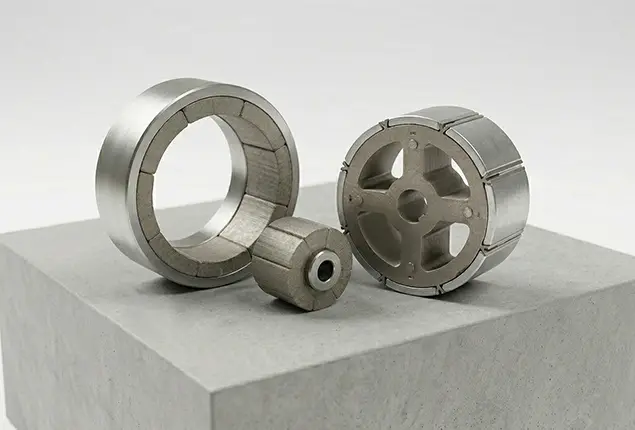
磁気アセンブリ are functional components that combine one or multiple permanent magnets with metal housings, plastic parts, or other structural elements to achieve specific magnetic and mechanical functions. Compared with standalone magnets, magnetic assemblies not only generate magnetic fields but also “guide, enhance, and protect” the magnetic flux through structural design, enabling more stable and controllable performance output.
Why Choose Magnetic Assemblies
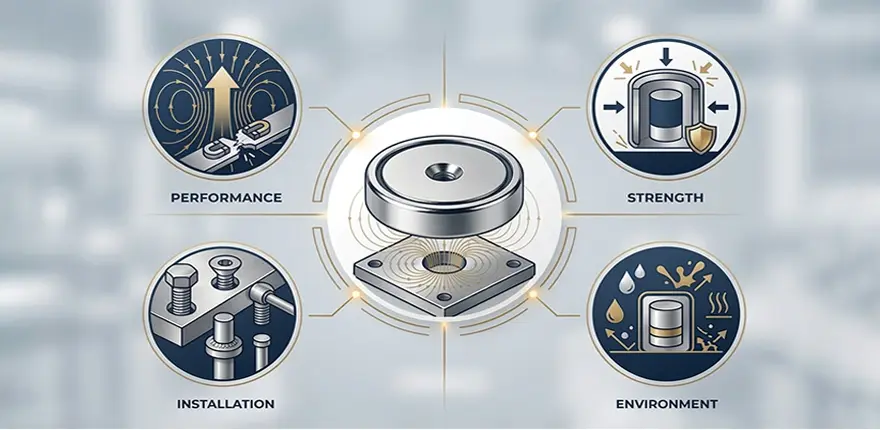
Enhanced Magnetic Performance
Improved Mechanical Strength
永久磁石 materials such as ネオジム そして SmCo are inherently brittle and vulnerable to impact or wear during operation. Through metal housings or structural encapsulation, magnetic assemblies can effectively:
- Prevent mechanical impact damage
- Reduce transportation and assembly risks
- Improve overall structural stability
At the same time, encapsulation structures help isolate moisture and corrosive media, significantly extending service life.
Easier Installation
Most bare magnets are difficult to install directly and often require adhesives. Magnetic assemblies are designed with installation requirements in mind and may include threaded holes, countersunk holes, welded studsあるいは spring pins. This allows them to be installed like standard industrial components, greatly improving automation and assembly efficiency.
Stronger Environmental Resistance
Magnet performance can be affected by temperature fluctuations and harsh environments. Through thermal management design, sealed encapsulation, and anti-corrosion coatings, magnetic assemblies can effectively resist oil, moisture, and corrosive conditions, ensuring stable magnetic performance in high-temperature, high-humidity, or high-pressure environments.
Main Types of Magnetic Assemblies
Based on structure and application scenarios, magnetic assemblies can be classified into various types. Each type differs significantly in magnetic flux concentration, installation method, and operating characteristics.
Motor Rotor and Stator Magnetic Assemblies
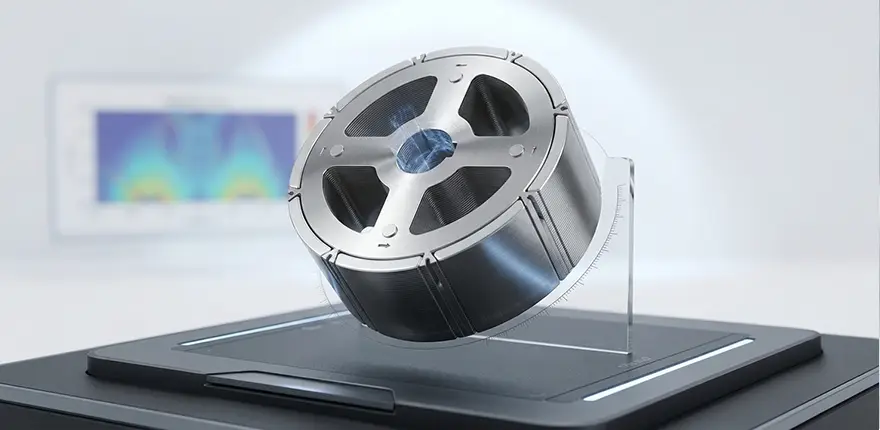
Motor rotor and stator magnetic assemblies are core components in modern motor systems and are widely used in EV drive motors, industrial servo motors, drone motors, and high-performance automation equipment.
Pot Magnet Assemblies
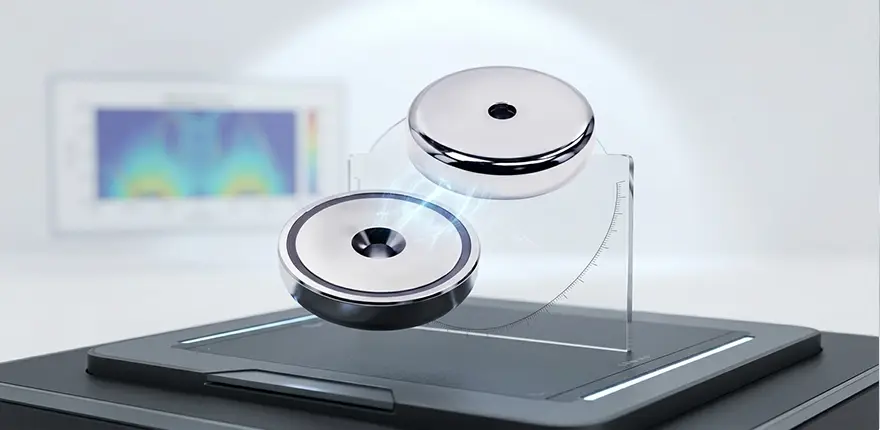
These assemblies embed magnets inside steel housings and output magnetic force through a single open surface. They are widely used in magnetic fixtures and workholding systems.
Halbach Arrays
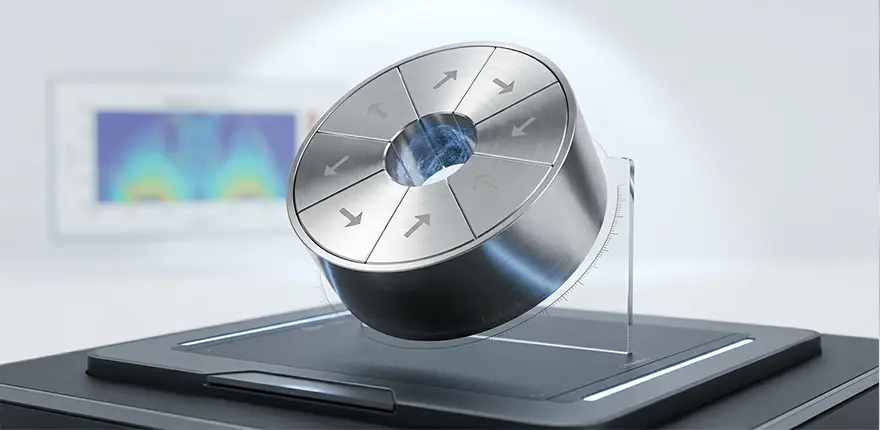
By arranging multiple magnets in a special pattern, ハルバッハ・アレー strengthen the magnetic field on one side while nearly canceling it on the opposite side. They are key components in linear motors, magnetic levitation systems, and particle accelerators.
Multi-Pole Magnetic Ring Assemblies
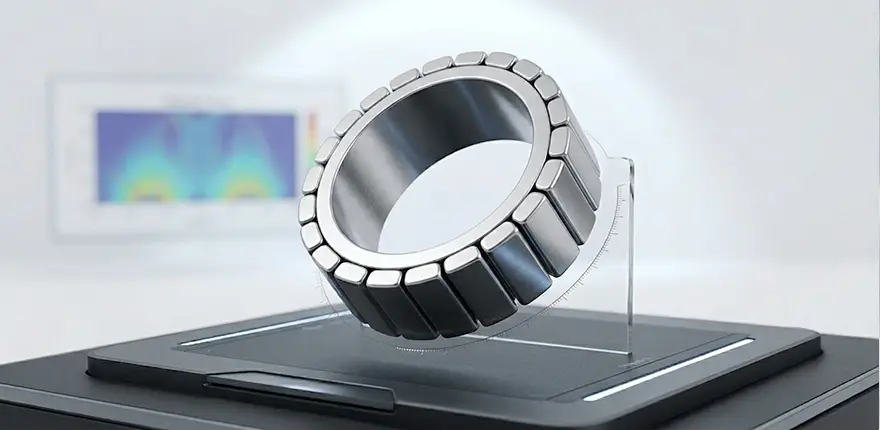
Multi-pole magnetization is applied to ring magnets with pole counts ranging from 2 poles to dozens of poles, forming periodic magnetic field structures. These assemblies are essential components in BLDC motors, servo motors, and encoders.
Magnetic Separation Systems
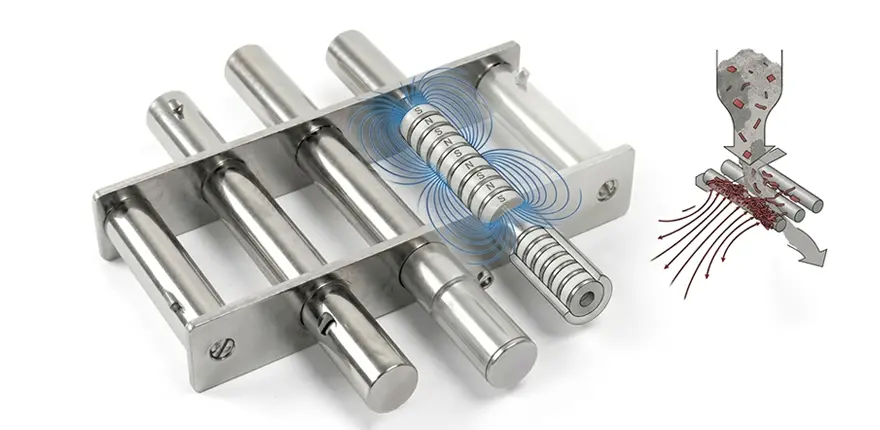
Using high-gradient magnetic fields, these systems absorb or separate ferromagnetic contaminants and are widely used in food processing, mining, recycling, and pharmaceutical industries.
Sensor Magnetic Assemblies
These assemblies provide stable magnetic field environments for Hall sensors, magnetoresistive sensors, and magnetostrictive sensors used in position detection, speed sensing, and current measurement applications.
Comparison of Core Magnetic Materials
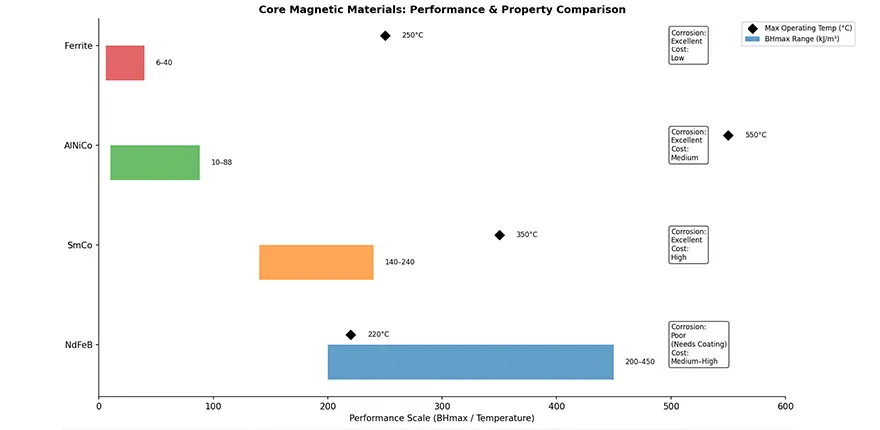
Selecting the right magnetic material is the most critical first step in magnetic assembly design. Different materials vary significantly in energy density, operating temperature, corrosion resistance, and cost.
| 素材 | 最大エネルギー積(BHmax) | 最高使用温度 | 耐食性 | Relative Cost |
|---|---|---|---|---|
| NdFeB (Neodymium Magnet) | 200–450 kJ/m³ | 80–220°C | Requires Protection | Medium–High |
| SmCo (Samarium Cobalt) | 140–240 kJ/m³ | 250-350°C | 素晴らしい | 高い |
| アルニコ | 10–88 kJ/m³ | 450–550°C | 素晴らしい | ミディアム |
| フェライト | 6–40 kJ/m³ | 250°C | 素晴らしい | 低い |
NdFeB Magnets: Engineers’ Preferred Choice and Challenges
ネオジム磁石 are currently the most widely used permanent magnet materials due to their extremely high magnetic energy density. They allow magnetic assemblies to achieve stronger magnetic performance within smaller volumes, making them ideal for electric vehicles, motors, and high-density electronic devices.
However, NdFeB magnets are highly sensitive to high temperatures and corrosive environments. Their キュリー温度 is approximately 310–340°C, but the actual usable temperature limit varies significantly depending on the grade. Standard N-series grades generally operate below 80°C, while SH/UH/EH grades containing heavy rare earth elements such as Dysprosium (Dy) and Terbium (Tb) can operate above 200°C, though at significantly higher cost.
In addition, NdFeB magnets have relatively poor corrosion resistance. Therefore, magnetic assemblies often require protective coatings such as nickel plating, zinc plating, or epoxy coatings.
Magnetic Assembly Selection Framework
Faced with various magnetic assembly solutions, a systematic selection framework can effectively reduce development risks and trial-and-error costs. The following five dimensions form a comprehensive evaluation system:
| Evaluation Dimension | Core Questions | Impact on Design |
|---|---|---|
| Magnetic Requirements | Air gap flux density, magnetic field uniformity, directional requirements | Magnet grade, magnetic circuit structure, magnet dimensions |
| Operating Environment | Temperature range, humidity, chemicals, vibration, impact | Material grade (H/SH/UH), coatings, bonding solutions |
| スペースの制約 | Installation size, weight limitations, shape requirements | Assembly type selection, energy density priorities |
| Lifetime & Reliability | Target lifespan, maintenance accessibility, failure consequences | Magnetic stability design, thermal stabilization specifications |
| Cost & Supply Chain | Annual volume, certification requirements, supplier distribution | Material alternatives, multi-source strategies |
After completing the above evaluations, it is recommended to validate preliminary designs through simulation models そして prototype testing. Before mass production, clearly defining acceptance criteria—including magnetic flux tolerance, dimensional tolerance, and appearance standards—is essential for ensuring consistency.
How to Choose the Right Magnetic Assembly Supplier
The performance of magnetic assemblies depends not only on the magnetic material itself, but also on magnetic circuit design precision, manufacturing stability, and quality control systems. Therefore, choosing a reliable supplier is critical to ensuring successful project implementation from design to mass production.
Engineering and Magnetic Circuit Design Capability
An excellent supplier should not only be a manufacturer but also possess finite element analysis (FEA) and magnetic circuit design capabilities. Topmag provides full engineering support from magnetic simulation and structural design to process optimization, helping customers reduce potential performance risks at early development stages.
Manufacturing Consistency and Process Control
The performance stability of magnetic assemblies largely depends on assembly and processing details such as adhesive thickness, assembly tolerance, and coating quality. Through standardized automated production systems and strict in-line inspection procedures, Topmag ensures high consistency in magnetic performance and dimensional accuracy for every production batch.
Full Lifecycle Quality Assurance
For high-end industrial applications, reliability is essential. Topmag provides comprehensive validation solutions including thermal cycling tests, salt spray testing, and lifetime evaluation to ensure long-term stable performance under demanding operating conditions.
Supply Chain and Delivery Capability
In the context of global supply chain fluctuations, stable raw material sourcing and efficient production responsiveness are increasingly important. Topmag helps customers optimize cost structures while maintaining performance and ensuring on-time delivery without disrupting production schedules.
Conclusion: Future Trends of Magnetic Assemblies
As industrial technology continues to evolve, magnetic assemblies are developing toward the following directions:
Reduced Heavy Rare Earth Usage
Driven by supply chain security and cost pressure, the industry is actively exploring NdFeB formulations that reduce or replace heavy rare earth elements such as Dy and Te, as well as new permanent magnet systems based on Fe-N and Mn-Bi materials.
Additive Manufacturing of Magnets
3D printing technology has already been successfully applied to the production of isotropic bonded magnets with complex geometries. In the future, it may expand into near-net-shape manufacturing of anisotropic sintered magnets, significantly reducing expensive post-processing costs.
Digital Twin and Intelligent Manufacturing
By integrating high-precision magnetic field simulation with real-time manufacturing data, digital twin models of magnetic assemblies can be established, enabling online quality prediction and process optimization while continuously improving production yield.
As technology continues to advance, high-performance customized magnetic assemblies will play an increasingly important role in future industrial systems.
よくある質問
Do magnetic assemblies require periodic maintenance during service?
Well-sealed assemblies are essentially maintenance-free. Periodic inspection is recommended in three scenarios:
① high-vibration environments — check annually for adhesive layer cracking or magnet displacement;
② exposure to corrosive media — inspect coating integrity and address rust spots immediately;
③ high-temperature cycling — conduct spot-check flux measurements every 1–2 years and compare against the original factory values.
If a magnetic assembly is damaged, can it be repaired or does it need full replacement?
It depends on the failure mode. Coating corrosion: the assembly can be returned for re-coating and re-magnetization. Adhesive layer failure: the assembly can be disassembled, re-bonded, and re-tested. Fractured magnet or severe demagnetization: full replacement is generally recommended, as repair costs approach the price of a new unit. Keeping a small stock of spare assemblies is advisable for high-uptime applications.
How do I choose between an electromagnet and a permanent magnetic assembly?
The key difference is control: permanent magnetic assemblies maintain holding force without power, making them ideal for long-duration clamping, unstable power supply environments, or low-energy-consumption requirements. Electromagnets release instantly when power is cut, which suits automation processes requiring frequent switching. If the load must release on power loss, choose an electromagnet. If the load must remain clamped on power loss (e.g., safety fixtures), choose a permanent magnetic assembly.
Can magnetic assemblies be re-magnetized?
Yes, but it requires specialist equipment. Re-magnetization needs a pulse magnetizer capable of producing a field 2–3× the magnet’s coercivity — not something most end-users have on hand. For assemblies that have lost performance due to overheating or demagnetization, returning to the supplier for re-magnetization or replacement is the practical route. Thermal stabilization must be repeated afterward.
How do I verify magnetic performance upon receiving the product?
Basic check: measure surface flux density at the specified point with a Hall probe gaussmeter and compare against the drawing tolerance (typically ±5–10%). Full verification: use a Helmholtz coil to measure total magnetic flux — more accurate and position-independent. If you lack test equipment, request a piece-by-piece inspection report from the supplier shipped with the order.
さらに詳しい洞察については、以下の関連ブログをご覧いただきたい:
What is Passivation for NdFeB Magnets?
Injection Molded Magnets – All You Need to Know
Arc Magnet vs Block Magnet: Key Differences in Motor Applications
2026 Magnet Report: Rare Earths & Supply Chain Truths
プロジェクトをアップグレードする準備はできていますか?TOPMAGの全製品をご覧ください!🧲。

私は磁石に関するポピュラー・サイエンスの執筆に専念している。私の記事は主に、磁石の原理、応用、業界の逸話に焦点を当てています。読者の皆様に価値ある情報を提供し、磁石の魅力や意義をより深く理解していただくことが目標です。同時に、磁石にまつわる皆さんのご意見もお待ちしています。磁石の無限の可能性を一緒に探っていきましょう!