
INJECTION MOLDED NDFEB MAGNETS
High-Performance Injection Molded NdFeB Magnets
Injection Molded NdFeB Magnets are permanent magnets made by mixing NdFeB magnetic powder with a thermoplastic resin binder. The material is first compounded and pelletized. It is then formed through an injection molding process.
Compared with compression bonded NdFeB magnets, Injection Molded NdFeB Magnets generally contain a lower percentage of magnetic powder. Their magnetic performance is therefore slightly lower. However, they offer greater shape flexibility and stronger structural integration. They are suitable for complex geometries and small precision components. For applications that require higher magnetic performance with relatively regular shapes, compression bonded NdFeB magnets can be considered.

Magnetic Performance of Injection Molded NdFeB Magnets
The following are typical magnetic performance references for Injection Molded NdFeB Magnets.
| Propiedad | BNI-3 | BNI-4 | BNI-5 | BNI-6 | BNI-6H | BNI-7 | BNI-5SR (PPS) |
|---|---|---|---|---|---|---|---|
|
Residual Induction Br (T) | 0.20–0.40 | 0.40–0.46 | 0.45–0.51 | 0.51–0.56 | 0.48–0.56 | 0.54–0.64 | 0.45–0.50 |
|
Coercive Force Hcb kA/m (kOe) | 120–240 (1.5–3.0) | 250–335 (3.1–4.2) | 280–360 (3.5–4.5) | 295–375 (3.7–4.7) | 335–400 (4.2–5.0) | 320–400 (4.0–5.0) | 300–360 (3.8–4.5) |
|
Intrinsic Coercive Force Hcj kA/m (kOe) | 480–640 (6.0–8.0) | 575–735 (7.2–9.2) | 640–800 (8–10) | 640–800 (8–10) | 1035–1355 (13–17) | 640–800 (8–10) | 875–1115 (11–14) |
|
Maximum Magnetic Energy Product (BH)max kJ/m³ (MGOe) | 8–24 (1.0–3.0) | 28–36 (3.5–4.5) | 37–44 (4.6–5.5) | 44–52 (5.5–6.5) | 40–52 (5.0–6.5) | 51–59 (6.5–7.5) | 36–44 (4.5–5.5) |
|
Density D (g/cm³) | 3.9–4.4 | 4.2–4.9 | 4.5–5.0 | 4.7–5.1 | 4.8–5.2 | 5.0–5.5 | 4.9–5.4 |
|
Recoil Permeability μr | 1.2 | 1.2 | 1.2 | 1.13 | 1.13 | 1.13 | 1.13 |
|
Average Reversible Temperature Coefficient α (Br) (%/°C) | -0.15 | -0.13 | -0.13 | -0.11 | -0.15 | -0.11 | -0.13 |
|
Maximum Operating Temperature Tw (°C) | 100 | 110 | 120 | 140 | 150 | 140 | 180 |
Types of Binders for Injection Molded NdFeB Magnets
The binder type directly affects the temperature resistance, mechanical strength, and chemical resistance of the magnet. It is therefore one of the key factors when selecting Injection Molded NdFeB Magnets.
| Binder | Characteristics | Temperatura máxima de funcionamiento | Aplicaciones típicas |
|---|---|---|---|
| PA6 (Nylon 6) | Good processability and lower cost. Relatively high moisture absorption. | 120°C | General operating conditions and cost-sensitive applications |
| PA12 (Nylon 12) | Better temperature resistance and mechanical strength than PA6. Lower moisture absorption and good dimensional stability. | 150°C | Automotive electronics and applications requiring higher dimensional stability |
| PA66 (Nylon 66) | Better temperature resistance and rigidity than PA6. High mechanical strength, but slightly higher moisture absorption and shrinkage than PA12. | 160°C | Applications requiring certain levels of mechanical strength and temperature resistance with moderate cost |
| PPS (Polyphenylene Sulfide) | High temperature resistance, excellent chemical resistance, and high mechanical strength. Higher processing difficulty and cost. | 180°C | High-temperature, high-humidity, or chemically demanding environments |
Magnetization Options
Injection Molded NdFeB Magnets offer flexible magnetization directions. They can support various magnetization methods and customized magnetization patterns.
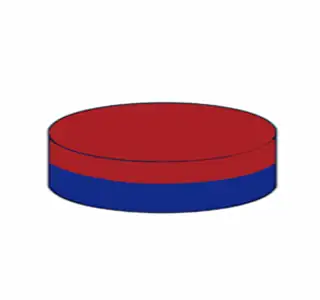
Axial Magnetization

Radial Magnetization

Multi-Pole Magnetization

Magnetización sesgada
How to Choose the Right Injection Molded NdFeB Magnets
Selecting the right Injection Molded NdFeB Magnets requires consideration of magnetic performance, cost, and operating conditions.
Operating Conditions: The actual operating environment of the equipment is the first factor to consider. Temperature, humidity, and chemical conditions can affect the long-term stability of the magnet. During material selection, the actual operating environment should be considered to determine the appropriate magnetic powder and binder type.
Rendimiento magnético: Magnetic performance is a key selection factor. It includes maximum magnetic energy product, residual induction, and coercive force. Different applications have different magnetic performance requirements. The required magnetic performance level should therefore be confirmed at the beginning of the selection process.
Coste: Cost is also an important factor when selecting Injection Molded NdFeB Magnets. Different magnetic powder grades, binder types, and production requirements can affect the final cost. When the operating conditions are satisfied, the overall solution can be evaluated to achieve a balance between performance and cost.