
 In the household sector, the energy consumption of various home appliances accounts for more than 15% of total energy use, and ceiling fans have long been an essential appliance in most families. Traditional ceiling fan motors are inefficient, resulting in significant energy waste. The International Energy Agency (IEA) has reminded us that improving energy efficiency has become one of the most important “driving forces” in meeting global energy demand. Amid the wave of green transformation, opting for energy-saving ceiling fans is not only a rational choice but also a key step in practicing a low-carbon lifestyle.
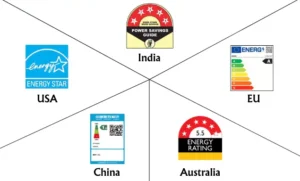 When purchasing a ceiling fan, the energy efficiency label should always be our primary focus. Taking India as an example, the BEE star rating label is the most authoritative benchmark. Issued by the Bureau of Energy Efficiency under the Energy Conservation Act, this label rates the energy-saving performance of household appliances from 1 to 5 stars. The higher the star rating, the more pronounced the energy-saving effect. When shopping, it is best to choose ceiling fans with 3 stars or above. only then can we truly achieve long-term electricity savings.
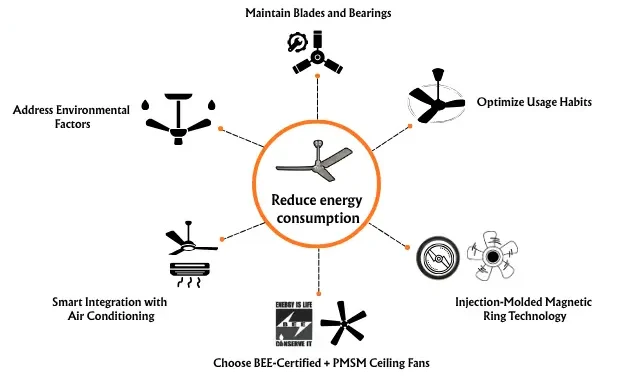
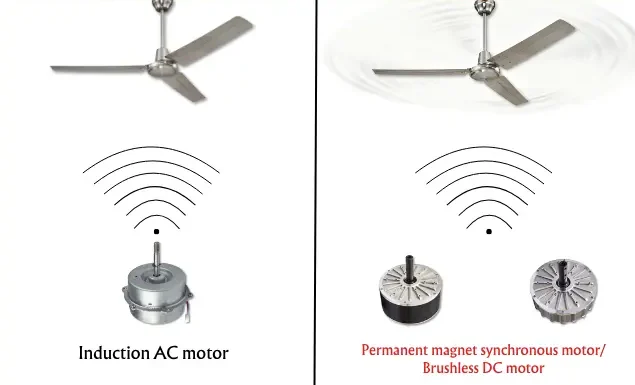
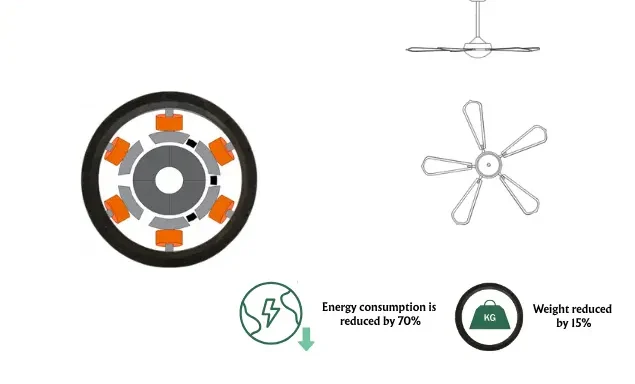 In brushless DC motors (BLDC) or permanent magnet synchronous motors (PMSM), the injection-molded magnetic ring serves as a key rotor component. The permanent magnet design eliminates reactive losses and directly converts electrical energy into mechanical energy, reducing energy consumption by up to 70%. Injection molding integration eliminates multiple processes such as welding and assembly, lightens the weight by 15%, and achieves high-precision magnetic field distribution.
TOPMAG is a top-tier magnet supplier with extensive experience in injection molded magnetic ring manufacturing, perfectly suited for BLDC ceiling fans. Contact us immediately to obtain samples and testing.
