
Can Magnetized Magnets Be Machined? Risks and Solutions
- Ethan
- 지식 기반
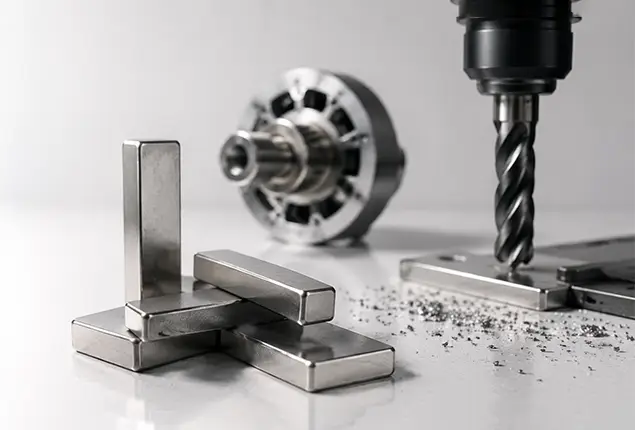
During magnet development and application, many customers may face a similar situations: magnets have already been manufactured, but the final dimensions do not fully meet the project requirements, or additional operations such as chamfering or drilling are needed. Can these finished magnets be machined again?
In theory,it is possible,but this is generally not recommended. Most permanent magnets, especially 네오디뮴 자석, are usually machined before 자화. Performing secondary machining after magnetization may affect magnetic performance and increase machining difficulty and manufacturing costs.
콘텐츠
주요 내용
- Most permanent magnets are machined before magnetization to ensure better machining accuracy and lower manufacturing risks.
- Secondary machining after magnetization is possible but generally not recommended due to the risk of magnetic performance loss and product damage.
- Heat, magnetic attraction, material brittleness, and coating damage are the major risks when machining magnetized magnets.
- Demagnetization → Machining → Re-magnetization is the preferred solution when secondary machining is unavoidable.
- Proper magnet design and selecting an experienced manufacturer can effectively eliminate the need for secondary machining.
Why Are Magnets Usually Machined Before Magnetization?
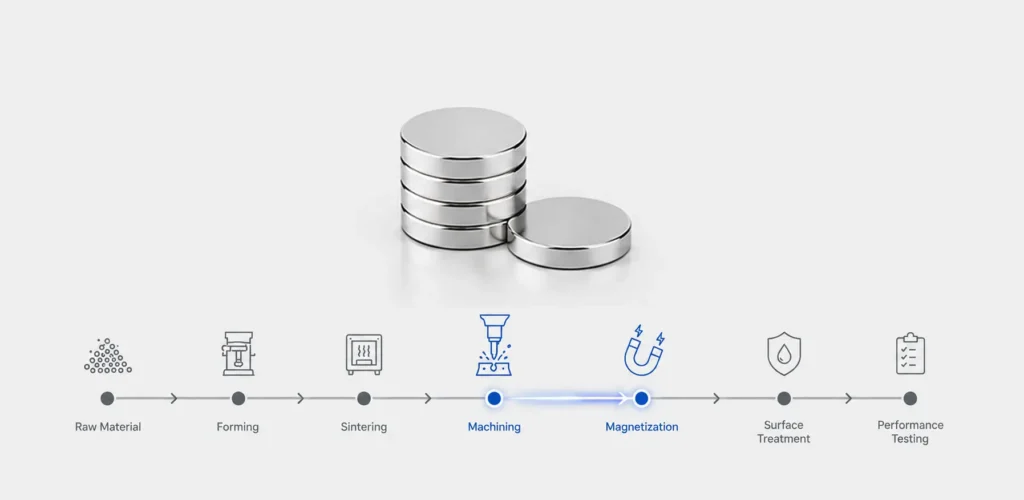
The typical process for magnet manufacturing 입니다:
Raw Material → Forming → Sintering → Machining → Surface Treatment → Magnetization → Performance Testing
This process of machining before magnetization means that all operations involving heat generation, vibration, mechanical stress, and metal debris are completed during the unmagnetized stage.This approach effectively reduce potential risks and make the machining process easier to control.
| Machining Stage | Magnet Condition | Benefits / Risks |
|---|---|---|
| Before Magnetization | Unmagnetized | No magnetic field interference, easy to fixture, easier to machine, and better dimensional control. |
| After Magnetization | Magnetized | Strong magnetic attraction, more difficult fixturing, higher machining risk, and increased manufacturing cost. |
What Are the Risks of Machining Magnetized Magnets?
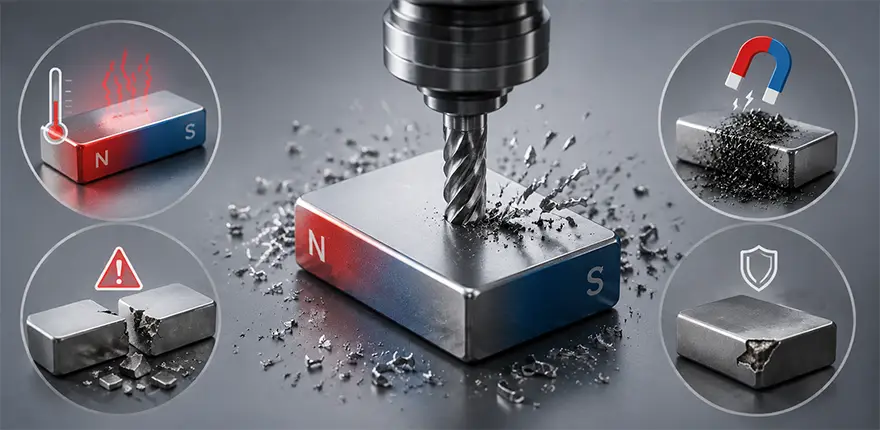
Although magnetized magnets can be partially machined in some cases, this method is generally avoided in practical manufacturing due to the following potential risks.
Risk of Magnetic Performance Loss
One of the main risks of machining magnetized magnets is changes in magnetic performance.
Mechanical friction during machining generates heat. If the machining temperature exceeds the magnet’s maximum operating temperature, irreversible damage to the magnetic properties may occur.
In addition, the magnetic circuit of magnets are usually designed and optimized as a complete system. Local machining on a magnetized magnet may disturb the original magnetic balance, resulting in uneven magnetic field distribution.
Magnetic Interference Causing Machining Difficulties
Magnetized magnets have strong magnetic force. During cutting, grinding, or other machining processes, the generated debris can easily attach to the magnet surface.These magnetic particles are not only difficult to remove but may also affect machining accuracy and surface quality.
Risk of Magnet Cracking Due to Material Brittleness
Permanent magnets are generally brittle materials and can easily crack or chip under impact or uneven stress.
Processing after magnetization makes it more difficult to secure the magnets, as attractive or repulsive forces between them increase, making the magnets more susceptible to damage during handling.
Risk of Surface Coating Damage
Neodymium magnets have relatively active chemical properties and usually require surface coatings for protection.
During secondary machining, the original coating may be damaged, reducing corrosion resistance and shortening the service life of the magnet.
How Should Magnetized Magnets Be Machined If Necessary?
If secondary machining of magnetized magnets is unavoidable, then strict adherence to standardized procedures is required to minimize operational risks.
Option 1: Demagnetization → Machining → Re-Magnetization
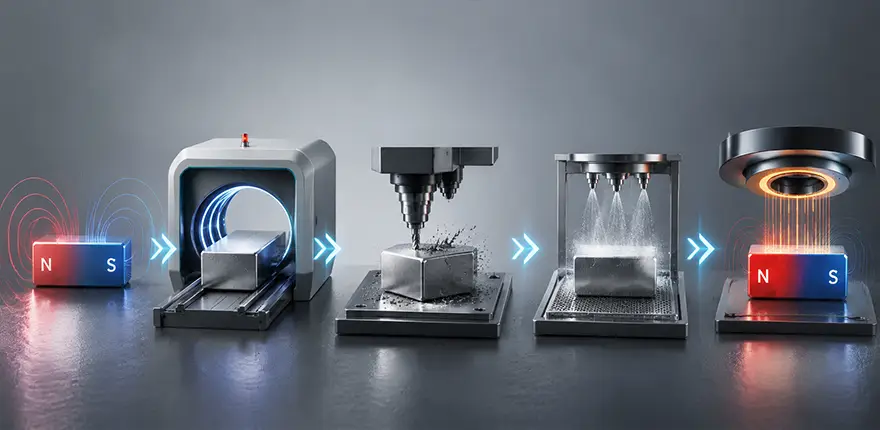
This is a relatively safer and more reliable solution.The process includes:
1. Complete demagnetization
Use a demagnetization machine to place the magnet in an alternating decaying magnetic field, reducing its residual magnetism to nearly zero.
2. Conventional machining
After demagnetization, the magnet has no magnetism and can be machined like a normal hard and brittle material.
3. Cleaning and surface treatment
Remove oil, debris, and machining residues. If necessary, repair the coating or apply additional anti-corrosion treatment.
4. Re-magnetization
Use a magnetizing machine to fully magnetize the finished product.
Option 2: Minimum Requirements for Machining Magnetized Magnets
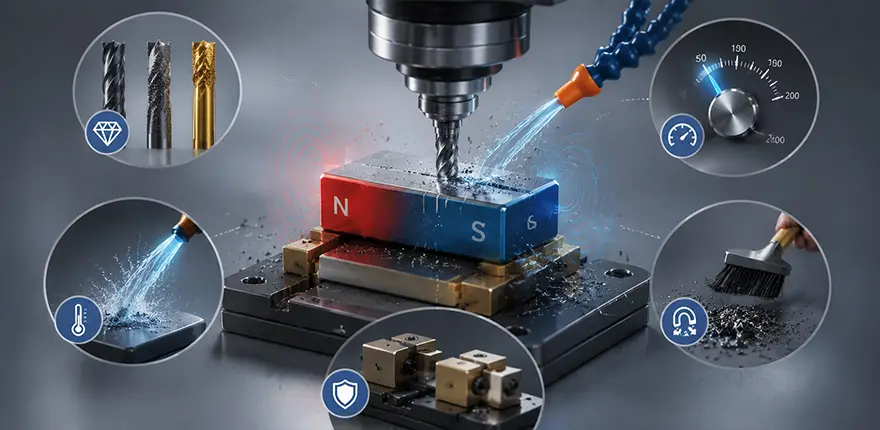
If demagnetization is not feasible due to special circumstances, magnetized machining must be performed with strict control of the following factors to reduce risks:
Tool selection:
Use carbide, CBN (cubic boron nitride), or diamond-based machining tools to reduce the risk of cracking and chipping.
Cutting parameters:
Use low-speed machining with a small feed rate to avoid excessive mechanical impact and to minimize heat generation during machining.
Cooling requirements:
Establish strict temperature monitoring and control. Continuous cooling should be applied during machining to ensure that the machining temperature remains below the maximum operating temperature of the specific magnet grade.
Chip removal:
Remove magnetic chips and debris after each machining process to prevent them from attaching to the magnet surface or affecting equipment operation.
Fixture protection:
Use non-magnetic fixtures made from materials such as brass or stainless steel to prevent fixture magnetization and metal debris attraction.
결론
In conclusion, magnetized magnets are not entirely impossible for machining, but due to the potential risks involved, this approach is generally avoided in industrial production.
For permanent magnets such as NdFeB 자석, 알니코 자석및 페라이트 자석, the required dimensions and specifications should be carefully considered during the design stage. And choosing a supplier with complete manufacturing capabilities can effectively reduce the risk of secondary machining.
If modification of a magnetized magnet is indeed necessary, the machining method and potential impacts should be carefully evaluated. Strict control of machining temperature, mechanical stress, and post-machining performance testing is required to ensure that the final magnet meets application requirements.
몇 가지 자주 묻는 질문
Which magnet materials (NdFeB, SmCo, Ferrite, AlNiCo) have the highest machining risks?
NdFeB magnets usually have the highest risk because they are brittle and have relatively lower operating temperature resistance.
SmCo magnets are also hard and brittle but have better high-temperature performance.
Ferrite magnets and AlNiCo magnets are relatively less brittle, but unnecessary secondary machining should still be avoided.
Can you drill holes in a magnet after it has been magnetized?
Technically possible, but highly risky.
It can easily lead to demagnetization due to localized heating or cause cracking due to material stress,Unless absolutely necessary,drilling directly into a magnetized magnet is not recommended.
Which magnets are not suitable for machining after magnetization?
High-performance neodymium magnets, multi-pole magnetized magnets, motor rotor magnets, and precision sensor magnets are less suitable for secondary machining because they require high consistency in magnetic performance.
Will machining magnetized magnets reduce their service life?
It’s possible.
If the surface coating is damaged during machining, or if the magnetic performance decreases due to excessive heat, it may reduce the satbility of the magnet in practical applications. Therefore, magnetic performance and corrosion resistance should be rechecked after machining.
Why is machining magnetized magnets more expensive?
Because magnetized machining requires additional control of magnetic fields, special fixtures, debris removal, temperature control, and performance inspection. The process is more complex than machining unmagnetized magnets, resulting in higher manufacturing costs.
더 자세한 내용은 관련 블로그에서 확인하세요:
How to Identify the North and South Poles of Arc Magnets? A Complete Guide
Ferrite Magnet Grades Explained
Neodymium Magnets for Industrial Automation
Rare Earth Magnets vs Ferrite Magnets: Key Differences
2026 Magnet Report: Rare Earths & Supply Chain Truths
프로젝트를 업그레이드할 준비가 되셨나요? TOPMAG에서 전체 제품군을 살펴보세요!🧲

저는 자석에 관한 대중 과학 글을 쓰고 있습니다. 제 기사는 주로 자석의 원리, 응용 분야, 업계 일화에 초점을 맞추고 있습니다. 제 목표는 독자들에게 유용한 정보를 제공하여 모든 사람이 자석의 매력과 중요성을 더 잘 이해할 수 있도록 돕는 것입니다. 동시에 자석과 관련된 여러분의 의견을 듣고 싶습니다. 자석의 무한한 가능성을 함께 탐구하는 동안 자유롭게 팔로우하고 참여해 주세요!