
How to Measure Surface Magnetic Field with a Gaussmete?
- Ethan
- Base di conoscenze
In industries such as magneti permanenti, electric motors, electronic components, and automation equipment, evaluating magnet performance is essential. Surface magnetic field strength is an important indicator of a magnet’s magnetic characteristics. It is widely used in quality control, incoming inspection, and product screening.
A gaussmeter is a professional instrument used to measure this value accurately. This article explains the basic concepts of surface magnetic field, how to measure magnet surface gauss correctly, how to interpret gaussmeter readings, and practical precautions to help you understand how to use a gaussmeter.
Contenuti
Punti di forza
A gaussmeter measures the magnetic field strength at a specific point on a magnet’s surface.
Correct Hall probe alignment and consistent measurement distance are essential for accurate readings.
Stable readings and repeated measurements help improve measurement reliability.
Surface gauss does not directly determine a magnet’s grade or overall magnetic performance.
Regular calibration and standardized testing procedures are essential for reliable quality control.
What Is Surface Magnetic Field?
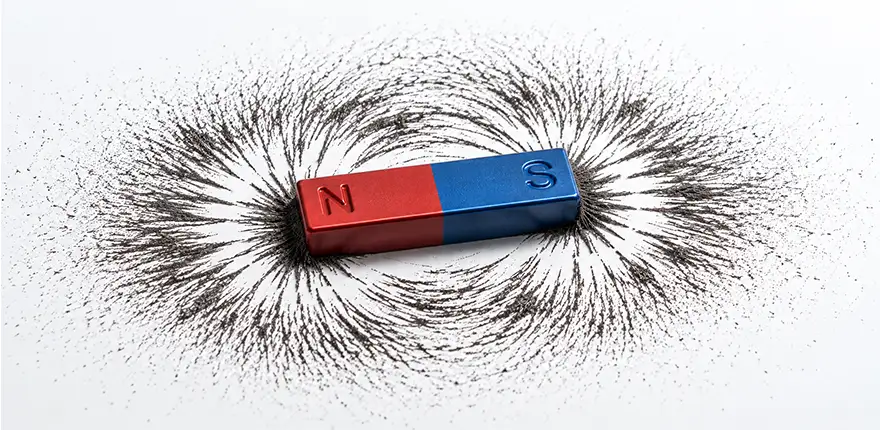
Surface magnetic field strength refers to the magnetic flux density at a specific position on a magnet’s surface, usually at the center of a magnetic pole. It is the value directly measured by a gaussmeter.
Surface magnetic field strength is commonly expressed in the following units:
Gauss (G): Commonly used for measuring the surface magnetic field of permanent magnets.
Tesla (T): The SI unit of magnetic flux density.
The conversion between these two units is:
1 T = 10,000 G
Difference from remanence: Remanence (Br) is a magnetic material property represented by the residual magnetic flux density under specified demagnetization conditions. Surface magnetic field strength describes the actual magnetic field at a particular position on a magnet in a specific measurement setup. It is often lower than the remanence value.
Influencing factors: Surface magnetic field strength depends not only on the magnet material, such as magneti al neodimio o magneti in ferrite, but also on dimensions, thickness, shape, magnetization method, and measurement distance. It is a comprehensive indicator influenced by multiple factors.
How to Measure Magnet Surface Gauss with a Gaussmeter?
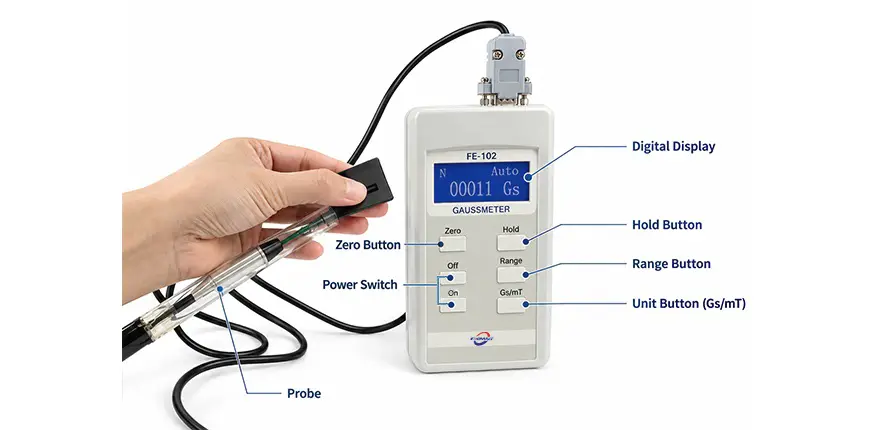
When using a Hall-effect gaussmeter to measure magnet surface magnetic field strength, follow standardized operating procedures to ensure accurate and repeatable results.
- Zero the Instrument and Check Calibration: Check the condition of the gaussmeter and Hall probe. Place the probe in the supplied zero-gauss chamber, if available, to zero the instrument and minimize the influence of ambient magnetic fields.
- Determine the Measurement Point: For a conventionally axially magnetized cylindrical magnet, the measurement point is usually the geometric center of the magnetic pole face.
- Position the Probe Correctly: Gently place the Hall probe against the magnet surface. Align the probe’s sensitive axis with the magnetic field direction to measure the desired field component accurately.For an axially magnetized cylindrical magnet, the sensitive axis should generally align with the axial magnetic field at the center of the pole face. Follow the probe manufacturer’s instructions for the correct orientation and sensing surface.
- Capture and Record the Reading: Wait until the reading stabilizes, then record the magnetic field strength. The peak value should only be recorded when the applicable testing procedure specifically requires peak-field measurement.
- Repeat the Measurement: To reduce measurement errors, repeat the measurement three to five times at the same geometric center point. If the test requires evaluating field distribution, take additional measurements at specified positions across the magnet surface.
How to Interpret Gaussmeter Readings
After obtaining a reading from a gaussmeter, it is important to interpret the data accurately and objectively.
- Units and measurement range: Gaussmeters used in industry commonly display magnetic field strength in gauss (G or Gs) or millitesla (mT). The surface magnetic field of high-performance neodymium magnets can reach several thousand gauss or even over ten thousand gauss, depending on the magnet’s dimensions, shape, magnetization, and measurement conditions.
- Polarity identification: The “N” or “S” sign on the display indicates the magnetic field direction relative to the probe’s defined positive sensitive axis. This information can help identify magnetic pole orientation during motor assembly and sensor matching. The sign alone does not universally identify the N or S pole; the probe orientation and instrument polarity convention must also be considered.
- Differences in measurement data: Different gaussmeter models may use Hall probes with different sensing-area sizes and specifications, which can lead to small differences in readings. Rare-earth permanent magnets are also sensitive to temperature changes. Therefore, ambient temperature should be considered during measurement to ensure reliable comparisons.
Precautions When Using a Gaussmeter
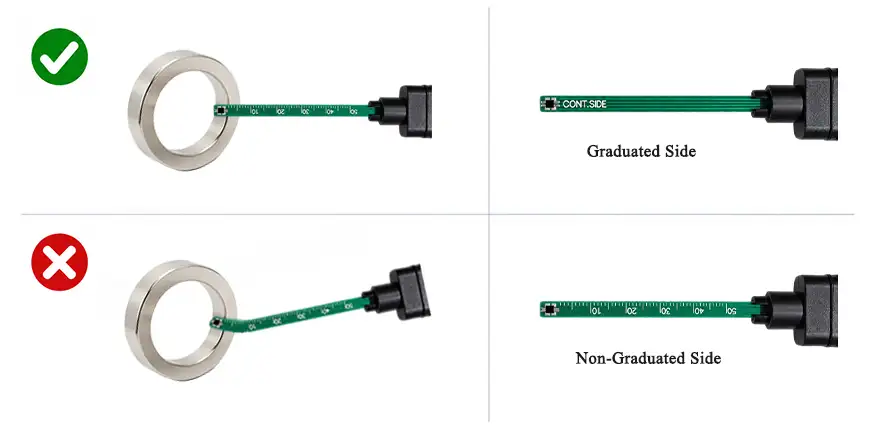
To ensure measurement accuracy and extend the service life of a gaussmeter, pay attention to the following points during routine testing.
- Avoid excessive probe bending: The front end of a gaussmeter probe is delicate and contains a precision Hall sensor. Handle the probe carefully, avoid excessive bending or stretching, and do not apply excessive pressure.
- Apply gentle contact: When measuring a magnet, bring the probe into contact with the surface gently, if the probe design permits contact measurement. Do not press hard, as this may wear or damage the sensing element.
- Check the correct sensing surface: The sensing characteristics and designated measurement surface vary by Hall probe model. Do not assume that the same side is always the correct sensing surface. Check the probe markings and follow the manufacturer’s instructions before measuring.
Conclusione
Accurate surface magnetic field measurement requires proper gaussmeter setup, correct Hall probe positioning, and consistent testing conditions. Understanding how to interpret readings and minimize measurement errors helps ensure reliable results in magnet inspection and quality control.
Alcune domande frequenti
Why Does the Gaussmeter Reading Change During Measurement?
Readings may fluctuate due to probe movement, changes in measurement distance, incorrect probe orientation, external magnetic field interference, or temperature variations. Keeping the probe stable and ensuring the instrument is functioning properly can improve measurement consistency.
Why Does the Same Magnet Produce Different Surface Gauss Readings?
Common causes include inconsistent probe positioning, angle, or contact, as well as instrument zero drift and temperature changes. Keep the measurement conditions consistent and repeat the test to verify the results.
Does a Negative Gaussmeter Reading Mean the Magnet Is Weaker?
No. A negative reading usually indicates that the magnetic field direction is opposite to the probe’s defined positive direction. It does not mean the magnetic field is weaker. Evaluate the field strength based on the absolute value of the reading and the probe orientation.
Does a Gaussmeter Need Regular Calibration?
Yes. Follow the manufacturer’s recommendations and your quality control requirements for periodic calibration or performance verification. This helps ensure reliable and accurate measurements.
Does a Higher Surface Gauss Reading Mean Better Magnet Performance?
Not necessarily. Surface magnetic field strength depends on factors such as magnet dimensions, shape, magnetization direction, and measurement conditions. It does not independently indicate overall magnetic performance. Other parameters, including remanence, coercivity, maximum energy product, and application requirements, should also be considered.
Per ulteriori approfondimenti, consultate questi blog correlati:
Magnetic Yoke vs. Keeper vs. Magnetic Shielding
Scienza e applicazione del ferromagnetismo, del paramagnetismo e del diamagnetismo
Metalli magnetici e non magnetici: Proprietà e applicazioni
How Does Air Gap Affect Permanent Magnet Motor Performance?
Siete pronti ad aggiornare il vostro progetto? Sfogliate la nostra linea completa di prodotti su TOPMAG!🧲

Mi dedico alla scrittura scientifica divulgativa sui magneti. I miei articoli si concentrano principalmente sui principi, le applicazioni e gli aneddoti del settore. Il nostro obiettivo è fornire ai lettori informazioni preziose, aiutando tutti a comprendere meglio il fascino e il significato dei magneti. Allo stesso tempo, siamo desiderosi di ascoltare le vostre opinioni sulle esigenze legate ai magneti. Sentitevi liberi di seguirci e di impegnarvi con noi per esplorare insieme le infinite possibilità dei magneti!